For those interested in the election, here are the profiles:
Indianapolis Star
Visions for IPS Success
A good public education system prepares children for future success and strengthens the community. That's why choosing four candidates to serve on the board of Indianapolis Public Schools may well be the most important vote you cast in the May 2 primary.
Eleven people are running to fill four spots on the seven-member Board of School Commissioners. We asked them to write about what they consider to be the most important issues facing IPS, the largest school district in the state with 38,000 students, 80 schools and a $518 million budget. We heard from nine of the candidates, who address issues that include student achievement, early-childhood education, athletic policies, safety, funding, and parental and community involvement.
Milton L. Baltimore Jr., At-large
Education: Arsenal Technical High School graduate; B.S. degree from Tennessee State University; master's degree from Butler University; attended Indiana University Law School one year.
Occupation: Retired IPS teacher of 34 years who currently works at the Finance Center.
Personal: Married, three adult children and three grandchildren.
My father was a well-known IPS teacher and administrator for more than 40 years. I am the only candidate who does IPS substitute teaching, and I see first-hand what is going on in IPS schools. I know that I have the expertise to meet the needs. IPS does not have a teacher on the School Board.
I am an avid supporter of Superintendent Dr. Eugene White, who is dedicated, creative, sincere and knows the problems of IPS students. So do I. I was raised in a large family and attended IPS schools.
The IPS board needs to work on budget problems with the public, governor, legislature, business leaders and others. More discipline authority needs to be given to the teachers and administrators.
Parents need more involvement, visits to the schools and to sit in classrooms. I will still do substitute teaching if elected to the board and will donate money to help with the deficient. I am sincere and know that IPS will become a great school system for all. I am asking for your vote to help me save IPS. It is time for a schoolteacher to be on the IPS board. Let me be that teacher.
Kelly E. Bentley, District 3, incumbent IPS board: Incumbent, past president.
Education: Attended IPS School 84, graduated from Broad Ripple High School.
Occupation: Work part-time for the Center for Family School Community Partnerships, a federally funded Parent Information Resource Center, and am a full-time student at IUPUI.
Personal: Wife and mother of two, both of whom have attended IPS schools. Board member, Horizons Urban Summer Youth Program, a summer academic enrichment program for IPS at-risk youth. I have been classroom volunteer and have lobbied the legislature on behalf of IPS children.
IPS has made great progress over the past eight years. Elementary students have made significant academic gains, the achievement gap has been narrowed and new programs have given parents expanded choices. Conversion of large high schools into small schools has fostered individualized education. Still, too many children fail the ISTEP-Plus exam and too many others drop out.
All children can learn. But some children must overcome formidable barriers to the learning process. We need to continue to partner with parents, community groups, social service agencies, faith communities, health-care professionals and business leaders to address these barriers to improving academic performance.
Quality public education is critically important to our city, but changes must occur in order to meet the needs of all students. Those changes include some type of equitable merit-pay system in order to ensure adequate recognition and compensation for the best and brightest teachers, and freedom to provide incentives to teachers of math, science, special education and other areas where we are experiencing shortages.
The state has changed how school districts are funded. IPS faces a $24 million deficit -- and unlike the federal government, we must balance our budget. The challenge will be to cut costs without damaging the quality of classroom instruction. Last year, I led our effort to close schools to save money; ultimately, the IPS Board of School Commissioners made the very painful decision to close three buildings.
IPS faces other funding challenges. The district spends more than $4 million a year for a police force to ensure that schools are safe for all children; we receive no additional funding for this purpose. We are required to provide free textbooks to all students who qualify for free or reduced-priced lunch; the state pays only a fraction of that cost, and over the past five years, this mandate has cost over $10 million.
We serve more than 3,000 non-English-speaking students at a cost of more than $5 million per year; the district receives less than $1 million in funding for this. These examples are the reason that one of my highest priorities has been advocacy for adequate state funding for IPS. I am also a strong proponent of full-day kindergarten and am committed to finding a creative way to provide this to IPS children.
When I decided to run for the board in 1998, I wanted to make a positive difference in the lives of children and I believe I have. There are no magic bullets, no tidy ideological fixes that substitute for the consistent hard work necessary to achieve real, sustainable improvements. If we are to realize the vision the board shares with Superintendent Eugene White, we must continue that hard work.
Michael D. Brown, District 5, incumbent IPS board: Incumbent, current president.
Education: Earned master's of divinity, doctorate of theology and B.S. degree in communications.
Occupation: Pastor, Positive Force Ministries; human resources supervisor, United Parcel Service; former math and science teacher; volunteer IPS basketball coach, referee and mentor.
The Indianapolis Public Schools district has some of the best and brightest students in the nation. The system includes hard-working parents and dedicated teachers and administrators, all committed to the best academic and social interests of the children we are blessed to serve.
As the president of the state's largest school district, it has been my pleasure to help lead IPS in a direction that both addresses our shortfalls, while expanding efforts and initiatives that have led to positive academic outcomes. I have watched and participated in efforts by our district to eliminate some of the barriers that have prohibited too many students from maximizing their potential.
To suggest that we are meeting the total needs of our students and community would be a fallacy. Those who do not identify the many issues we must continue to address with regard to achievement have no place serving IPS' children or families.
There is no question that IPS suffers too high a dropout rate and far too low graduation rates.
Like many school districts with similar demographics, IPS has also fallen victim to an achievement gap where many of our African-American students lag behind their counterparts in core academic subject. When any of our students exits school ill-prepared to compete in the local and global marketplaces, our entire system suffers.
Quite frankly, despite the tireless efforts I have witnessed by our staff, much work remains if we are to ensure all children succeed during their IPS careers. Despite the statistics, however, I remain supremely confident that all children can succeed.
I am keenly aware of the issues the system faces. But I have never been more optimistic that IPS will become the world-class school district we all envision.
My vision for IPS is rooted in basic values that not only strengthen educational environments, but the entire community. That vision begins first with strengthened parental and community involvement.
With a better-engaged community behind us, IPS can enjoy an increased focus on accountability and academic rigor. We can ensure the increased options such as the small-schools initiative will work in the way they are intentioned. We can gain the grass-roots presence necessary to fight for the level of funding that will assure our children gain access to the physical fitness and mentally enriching activities we should provide.
IPS is indeed moving in the right direction. And I will not rest until the promise of the best possible education for all of our children is realized. As a life long supporter of public education, I am very encouraged with the progress being made for our students. However, we should be tempered because much work remains so that all of our children's academic futures are bright.
Barry Campbell, At-large
Occupation: Business owner.
Education: Graduate of Lawrence Central High School and Valparaiso University.
Personal: Father of IPS first-grader.
I wish Superintendent Dr. Eugene White all the best in his goal of transforming Indianapolis Public Schools into the best urban school district in the nation. But more importantly and more immediately, I would like to see IPS become academically competitive with the Marion County township districts. White is the right man at the right time to do exactly that.
Alternative schools and programs are fine for the few students who are eligible or are chosen by lottery to participate, but I am more interested in raising the academic performance of the district as a whole.
The purpose of any school is to teach. Teachers teach. IPS teachers are underpaid when compared to the average teacher salaries of the surrounding townships. If we want to hire and retain the best teachers, we need to offer them a competitive salary.
Do we need more money to do that? No. IPS already spends more money per pupil than all but 10 other school districts in the state. Of the neighboring township districts, only Pike spends more. Where is IPS spending its money? A comparison of IPS employees to those of the average township districts reveals an excessive number of administrators and certified employees other than teachers.
While IPS has more than three times as many students as the average of the township districts, it has almost five times as many administrators and other certified employees. Obviously, these additional personnel have not improved academic performance. If IPS reduced the ratio of these employees per student to the average of the surrounding districts, the budget shortfall would be virtually eliminated.
Economies of scale would suggest that IPS should be able to provide the same services to students as the other districts at a lower cost per student. Any services that could be provided at lower cost by contractors than by IPS employees should be contracted out. These additional savings would allow us to pay teachers what they need and deserve.
Only when we treat our teachers right can we expect them to produce the same academic results from students as the neighboring school districts do. We can treat them right by adequately compensating them, by allowing them to teach with as little administrative interference as possible, and by encouraging and respecting their input on board policies such as curriculum and student discipline.
Children are eager to learn. We must ensure that teachers are as eager to teach. As the father of an IPS first-grader, I am driven to ensure that my daughter receives a decent education. As an IPS board member, I will work to enable the teachers to perform at their best. I look forward to assisting Dr. White to achieve his goal. But IPS needs to look to its neighbors for examples of higher academic performance at no greater cost.
Barbara Coleman-Knight, At-large, incumbent IPS board: Incumbent (appointed a year and a half ago).
Education: Graduate of Shortridge High School, Indiana Business College and Indiana University-Purdue University Indianapolis.
Occupation: Have worked for more than 25 years at the Indiana Department of Education as an education consultant in the Center for School Improvement and Performance.
Personal: Married to Charles "Tony" Knight and one daughter; both are Shortridge graduates. Serve on PTA and Montessori Parent Advisory committees.
IPS faces inadequate funding. My solution is to encourage the legislature to prioritize equitable funding for public education.
We know that third-grade success and failure data are used to project the amount of prison space that will be needed in the future. We must all work together to correct and prevent this growing problem through quality education. It is far more cost-effective to the state to invest preventively during early-childhood years than to feed, clothe and house inmates later in life.
Our best investment of state dollars is to provide each child with a quality education that will allow a lifetime of self-sufficiency.
IPS serves a large number of children who need a range of additional assistance to help them have a successful educational experience. The reality is that some expenses for classroom instruction do not disappear even if some students relocate to schools outside the district, because support structure costs remain stable.
Continuing expenses of building mortgages, utilities and salaries for teachers and administrative and support personnel must still be paid even if there are fewer students in a classroom. We must have a commitment from our legislature and governor to prioritize equitable funding for public education.
My vision is to produce students who graduate from high school empowered with a range of options to pursue their choice of career and higher academic interests. Recently, Dr. Eugene White initiated a program, Parents as First Teachers. Our district will work with parents to provide educational experiences from the time of birth so that all students will be prepared with a basic foundation when they enter school.
In elementary grades, Dr. White has also started a Teach and Re-Teach Mastery Learning program to ensure that students have the knowledge and skills needed as they progress through their educational experience. Our high schools have also been restructured into small schools to improve attendance and academic experiences.
My vision for IPS is also to provide educational experiences for students to become well-rounded, productive and contributing citizens. Academics are our first priority, but we realize that student participation in sports offers valuable benefits including team work, leadership development, goal setting, relationship building and self-discipline.
Our superintendent offers an extraordinary vision of overall excellence for every area of IPS. Our challenge is to improve our athletic program without significant cost and without offering less opportunity for participation in sports at each high school. My solution would be to let each high school keep its current sports programs in place supplemented by camp training experiences, enlist the help of the parks department, enhance volunteer efforts to coordinate elementary sports programs and offer a high school sports magnet option at only one location.
Finally, my overall solution for IPS challenges was to hire our highly qualified superintendent, Dr. Eugene White.
Maureen Jayne, At-large
Education: Graduate of Broad Ripple High School; attended Indiana University Bloomington and now working on a B.S. in general studies at IUPUI.
Occupation: Licensing adviser/secondary student-teaching assistant, IUPUI School of Education.
Personal: Husband, Tim, and three children who attended IPS schools.
I have a vision that Indianapolis Public Schools will be able to offer full-day kindergarten to every child, with preschool opportunities as well; that the graduation rate will become 100 percent; and that IPS succeeds in its renewal project.
Indianapolis has a public school district to be proud of. IPS opens its doors to 38,000 students every school day, and 81 percent of those students qualify for free or reduced lunch. Poverty walks around this school district. But every child has a school to go to.
IPS needs to reach children even in the preschool years. Research states that poverty severely impacts educational growth. I would like to see all necessary resources devoted to alleviating symptoms of poverty as children prepare to attend school, including nutrition and health care. Many free or low-cost services are currently offered by the city, businesses and nonprofits. These services could be bundled in a package easy for parents to take advantage of.
Research has shown that the earlier the brain is stimulated, the more its influence on academic achievement. Full-day kindergarten will academically strengthen at-risk students. Indiana is behind the rest of the country in providing this basic building block. Any vision of IPS' future must include programs that will help the very youngest children in the district. This fall the class of 2018 will enter first grade. We must see them succeed.
Twelve years later, those first-graders should be high school seniors graduating. I support the small schools that have been implemented in IPS high schools. Every student is known to a group of teachers. Communication between school and home can improve. Smaller class sizes would help. We mustn't shortchange high school education. I see prioritizing education paying huge dividends to society.
IPS is two-thirds of the way through a building renovation and construction campaign. There are brand new and renovated schools in the neighborhoods, adding property value and community pride. The last third of the project involves mostly elementary schools. Our community must find a way to finance this project. IPS is as important an urban renewal project as anything else in our city.
The heart of my vision for the future of IPS is to expand the community's perception of who IPS students are. There are students who are achieving in IPS. There are students participating in extra-curricular activities. There are graduates in every field. We all need to be visiting IPS schools. Parental involvement is important. Every school needs an active Parent Center where parents can feel welcomed and informed.
Very importantly, all of us must act on reforming and improving our public schools without hurrying the educational process. There is a time for everything. We must be careful to protect the learning moment.
Derek Redelman, District 3
Education: Attended IPS schools and graduated from Northwest High School; B.A. from Miami University (Ohio) in public administration and political science; MBA from University of Chicago.
Occupation: President and founder of Redelman Consulting, a public policy research and advocacy firm focusing primarily on K-12 education issues; former senior fellow and director of education policy at Hudson Institute, executive director of the Christel DeHaan Family Foundation and Project E; director of education policy for the Indiana Chamber of Commerce; and policy analyst for the Indiana Department of Education.
Personal: Wife, Shellie, and three children.
May 2 is a critical date for the future of Indianapolis Public Schools. The recent hiring of Eugene White as superintendent holds great promise for some of the challenges that face IPS, but ultimate success will depend on the election of a board that will support and complement his leadership.
As a professional education researcher, I know that IPS can do better. There are plenty of examples here and throughout the country that are proving that urban schools can be successful. Three common themes to success are high expectations, increased options for parents and efficient use of resources. These also represent the areas where I have focused my own work in education.
On high expectations: I encouraged Indiana policy leaders to rewrite state standards that had ranked among the worst in the country and now rank among the best. I helped write Indiana's new accountability law and helped push the Core 40 high school graduation requirement. I also wrote a new law requiring better reporting of high school dropouts and have been a leading advocate for fixing Indiana's broken state testing system.
On choice: I helped write Indiana's charter school law and originated the idea of letting Mayor Bart Peterson oversee charter schools. I have served as a consultant to national charter school leaders and have helped more than a dozen charter schools get started in Indiana, including 21st Century Charter School, Tindley Accelerated School and KIPP school.
On finance: I have helped highlight the majority of education funds that are spent outside of the classroom, much of that on administration and construction debt. I have also helped charter schools to develop successful operating budgets with almost half the funds that are available to traditional public schools. And I have advocated for greater flexibility to allow local districts to focus funds on local priorities.
Each of these areas holds great potential for IPS. In less than a year, Dr. White has gotten a great start on raising expectations and expanding options for parents. I am proud of the work that I have done to help make those changes possible -- especially my work on charter schools -- and I look forward to helping Dr. White expand and implement those efforts.
IPS also faces some tough budget decisions, thanks to poor management by the current board and a continuing exodus of students. With an operating budget that now exceeds $13,000 per student, I can assure taxpayers that I will not seek higher taxes to overcome this challenge. I can also assure current IPS families that teaching positions and other classroom expenditures will be the absolute last place that I will support cutting.
Continued changes in IPS will not be easy, but the futures of our kids, our neighborhoods and our city all depend on it. I look forward to helping with the aggressive reform agenda that Dr. White has recently initiated and I would appreciate your vote on May 2 to help make sure those reforms continue.
Judie Williams, At-large
Education: Attended Hartford, Conn., public schools K-12. Degrees from Central Connecticut State University (B.S. in elementary education), master's degrees from Indiana University (counseling) and Butler University (administration).
Occupation: Served as an educator in Connecticut, Massachusetts, IPS and Wayne Township. Has had personal and professional experiences in private, parochial and public schools.
Personal: A son who attended IPS schools and is an IUPUI graduate and a daughter who graduated from Park Tudor and Purdue University; two grandsons.
As an educator and parent, I was perplexed at the inconsistency in delivery of educational instruction throughout Indianapolis. I learned from my son's educational experience that I had to be an advocate for his success. I learned that I could not just send him to school and expect him to come home with the attitude, knowledge and skills necessary to succeed at the next level.
I learned as I transitioned from suburban to urban schools that there was not equity in resources and expectations.
One thing I know for sure is that a public school system can provide the resources, programs, and opportunities necessary for student success.
My vision for all children in IPS is that they be inspired to work hard and empowered to take advantage of the opportunities available to live purposefully in this world.
There are multiple challenges in IPS that require action to change the direction of the system. It appears that the longer children are in IPS schools, the dumber they are getting. It will take a comprehensive effort to focus on what matters. The IPS budget should reflect that a major percentage of funds are directly channeled into classroom/certified teaching. Presently, it appears that there is almost a 50-50 split between support staff and direct teaching staff. We are reading about teacher cuts when direct time-on-task instruction is a critical area in improving student performance.
It is time for IPS to make the changes necessary to improve student performance.
Teachers need ongoing training and tools to access information available to support student instruction and learning.
Our expectations will determine the attitude and achievement of our children and families. We must go beyond our comfort zones to engage families and communities in the learning process. We must look truthfully at where we are as a district and determine where we need to be. Our time and talent must reflect our mission. We want all students to learn at high levels and reach their potentials to compete in a global world.
Where are we in ensuring opportunities, resources and programs for all children?
All students need to have the information necessary for success at each level of instruction. It is the responsibility of the educational community to know what students must do and what level of competency is necessary to show mastery. This information must not be given to some and kept from others. When information is denied to a group of citizens they become weak and are left behind.
We must do things differently and parents must be a key to this change. Our school system is in crisis. This creates an opportunity to make a positive difference for the future of our society.
Olgen Williams, At-large
Education: Attended IPS School 41 and Shortridge High School; earned B.S., master's and doctoral degrees.
Occupation: Executive director of Christamore House Family and Community Center. Substitute teacher and Sunday school teacher for more than 29 years.
Personal: Wife, Mary, and 11 children.
I have worked with many Indianapolis community and professional organizations. A great deal of that work is centered on children. I am blessed to have a career that allowed me to address these pressing issues of community and youth.
I have lived in the IPS district for more than 45 years.
My memberships and community activities include Human Relations Advisory Council of Wayne Township Schools for more than 18 years, president of the Haughville Community Council, Westside Concerned Dads, board member of Indiana Youth Institute, advisory board member of Indiana University-Purdue University Indianapolis, Urban Scouting Committee, Great Indianapolis Progress Committee, Indianapolis Race Relations Council, Westside Education Task Force Committee, and George Washington Community School Committee and currently serve on IPS Wendell Phillips School 63 Re-opening Committee.
I am running for the board because I think we need board members who are more accountable to the community and visible to the voters, IPS staff and parents of the students. Some board members are invisible to their community after elections and therefore are not in touch with the staff of IPS, parents, students and community. A board member must listen to the ideas and concerns of the whole community. The School Board should be accountable to the taxpayers to give assurance that funds are being spent wisely and efficiently.
I have concerns about the safety of students and staff and will support plans to ensure that all schools have adequate security and that staff be trained to handle these issues. I would like to see more programs to allow students to receive extra help to pass the ISTEP-Plus and graduation qualifying exams and graduate from high school.
I would like to see more support for:
All children to reach their full potential and become happy, successful adults.
Fostering cooperation among homes, business, churches and schools.
Getting the views and aspirations of parents so they can be partners with the school system in developing programs that help create a culture of learning in the homes.
Helping to close the disparity between the goals of parents and those of educators.
Ending the frustrations of many teachers over lack of control of curriculum planning and decision-making.
If elected to the school board I would continue to serve the Indianapolis community tirelessly to give all children my best to ensure they are receiving an education that is second to none.
Monday, April 24, 2006


Pakistan
This is a letter from a doctor in Pakistan who is concerned about the "race to the finish line" rather than the needs of the people as he sees it. This could be said all over America as well. We want programs NOW but we don't always understand the problems. In fact in America, we don't even know what early childhood is. When the experts figure that one out, the money drain, will stop. Right now I'd advocate a stop, look and listen before we put another dime into early childhood. Our governor here in Indiana is privatizing a lot of state run projects. That's an initiative that would really help early childhood.
Childhood and Globalisation
Sunday April 23, 2006
Pakistan Tribune, Pakistan
I refer to the recently organised conference and symposium on "Early Childhood Development" by the Sindh Education Foundation. I would like to share my observations and point out a few missing things, which I think would have added value and relevance to the conference. Early childhood is the formative period for the development of the personality as a whole. I think that generally we fail to distinguish between its various stages, i.e. early, middle and late childhood, which spans from 0 to twelve years.
It would be helpful to address each period specifically as the needs, issues or problems related to each stage are different. There are three major stakeholders of child development; parents, teachers and experts on human behaviour (psychologists, psychiatrists, sociologists, etc). But I noticed from the conference programme that local experts on human behaviour were missing.
The issues and problems discussed and interpreted by parents and teachers would produce more fruitful results and help in finding solutions if human behaviour experts were brought in.
Human diversity is under threat from globalisation and very few sections of the society are conscious of this issue. Unfortunately, it has been observed that institutions and individuals who claim to be creating awareness against the negative impacts of globalisation on culture, language, education and society are themselves engaged in promoting and advancing globalisation.
The Sindh Education Foundation has opened a large number of schools for girls and women in disadvantaged and backward areas. But it tends to produce documents and educational material in English, while there is a dire need for them to be done in Sindhi or Urdu. I was wondering which child was being referred to during the discussions; the rural, the semi urban or the urban.
However, it was obvious that the discussions revolved mainly around the elite child who watches TV, goes to an English medium school and suffers from lack of attention from its busy parents. I think we should be mindful of the fact that alienation from the local people and discouraging diversity are morbid signs of globalisation.
Dr Qadir Abro
President Organization for Mental Health
Karachi
Childhood and Globalisation
Sunday April 23, 2006
Pakistan Tribune, Pakistan
I refer to the recently organised conference and symposium on "Early Childhood Development" by the Sindh Education Foundation. I would like to share my observations and point out a few missing things, which I think would have added value and relevance to the conference. Early childhood is the formative period for the development of the personality as a whole. I think that generally we fail to distinguish between its various stages, i.e. early, middle and late childhood, which spans from 0 to twelve years.
It would be helpful to address each period specifically as the needs, issues or problems related to each stage are different. There are three major stakeholders of child development; parents, teachers and experts on human behaviour (psychologists, psychiatrists, sociologists, etc). But I noticed from the conference programme that local experts on human behaviour were missing.
The issues and problems discussed and interpreted by parents and teachers would produce more fruitful results and help in finding solutions if human behaviour experts were brought in.
Human diversity is under threat from globalisation and very few sections of the society are conscious of this issue. Unfortunately, it has been observed that institutions and individuals who claim to be creating awareness against the negative impacts of globalisation on culture, language, education and society are themselves engaged in promoting and advancing globalisation.
The Sindh Education Foundation has opened a large number of schools for girls and women in disadvantaged and backward areas. But it tends to produce documents and educational material in English, while there is a dire need for them to be done in Sindhi or Urdu. I was wondering which child was being referred to during the discussions; the rural, the semi urban or the urban.
However, it was obvious that the discussions revolved mainly around the elite child who watches TV, goes to an English medium school and suffers from lack of attention from its busy parents. I think we should be mindful of the fact that alienation from the local people and discouraging diversity are morbid signs of globalisation.
Dr Qadir Abro
President Organization for Mental Health
Karachi
Sunday, April 23, 2006
Helpful Hints

Robynn sent this. I love helpful hints. Just finished reading a novel by a woman named Anne Douglas Sedgwick 1873-1935. The book was published in 1924 as was really about the difference between the French way of life and the English after WWI. The descriptions were absolutely beautiful, and the soft sweet activities were enviable. The dialogue was to die for and the descriptions of meals, homes, clothes were really quite interesting. You often wonder how people do the things they do to be perfect hosts and hostesses and have perfectly wonderful homes and still be genuine - sans servants. Well here are some easy tips.
Helpful Things-Who Knew??
Sealed envelope - Put in the freezer for a few hours, then slide a knife under the flap. The envelope can then be resealed. (hmmmmmm.).
Use Empty toilet paper roll to store appliance cords. It keeps them neat and you can write on the roll what appliance it belongs to.
For icy door steps in freezing temperatures: get warm water and put Dawn dish washing liquid in it. Pour it all over the steps.
They won't refreeze. (wish I had known this for the last 40 years)
Crayon marks on walls? This worked wonderfully! A damp rag, dipped in baking soda. Comes off with little effort, (elbow grease that is!). Permanent marker on appliances/counter tops (like store receipt BLUE)... Rubbing alcohol on paper towel.
Whenever I purchase a box of SOS Pads, I immediately take a pair of scissors and cut each pad into halves. After years of having to throw away rusted and unused and smelly pads, I finally decided that this could be much more economical. And now a box of SOS pads last me indefinitely! In fact, I have noticed that the scissors get sharpened this way!
Blood stains on clothes? Not to worry! Just pour a little hydrogen peroxide on a cloth and proceed to wipe off every drop of blood. Works every time! Now, where to put the body?
Use vertical strokes when washing windows outside and horizontal for inside windows. This way you can tell which side has the streaks. Straight vinegar will get outside windows really clean. Don't wash windows on a sunny day. They will dry too quickly and will probably streak.
Spray a bit of perfume on the light bulb in any room to create a lovely light scent in each room when the light is turned on.
Place fabric softener sheets in dresser drawers and your clothes will smell freshly washed for weeks to come. You can also do this with towels and linen.
Candles will last a lot longer if placed in the freezer for at least 3 hours prior to burning.
To clean artificial flowers, pour some salt into a paper bag and add the flowers. Shake vigorously as the salt will absorb all the dust and dirt and leave your artificial flowers looking like new! and works like a charm!
To easily remove burnt on food from your skillet, simply add a drop or two of dish soap and enough water to cover bottom of pan, and bring to a boil on stove top.
Spray your TUPPERWARE with non stick cooking spray before pouring in tomato based sauces
and there won't be any stains.
Wrap celery in aluminum foil when putting in the refrigerator and it will keep for weeks.
When boiling corn on the cob, add a pinch of sugar to help bring out the corn's natural sweetness.
Cure for headaches: Take a lime, cut it in half and rub it on your forehead. The throbbing will go away.
Don't throw out all that leftover wine: Freeze into ice cubes for future use in casseroles and sauces. Left over wine? What's that? (lol)
To get rid of itch from mosquito bites, try applying soap on the area And you will experience instant relief.
Ants, ants, ants everywhere .... Well, they are said to never cross a chalk line. So get your chalk out and draw a line on the floor or wherever ants tend to march. See for yourself.
Use air-freshener to clean mirrors. It does a good job and better still, leaves a lovely smell to the shine.
When you get a splinter, reach for the scotch tape before resorting to tweezers or a needle. Simply put the scotch tape over the splinter, then pull it off. Scotch tape removes most splinters painlessly and easily.
Now look what you can do with Alka Seltzer. Clean a toilet. Drop in two Alka Seltzer tablets, wait twenty minutes, brush and flush. The citric acid and effervescent action clean vitreous China.
(But, but, the stains are above the water line.)
Clean a vase. To remove a stain from the bottom of a glass vase or cruet, fill with water and drop in two Alka Seltzer tablets.
Polish jewelry. Drop two Alka Seltzer tablets into a glass of water and immerse the jewelry for two minutes.
Clean a thermos bottle. Fill the bottle with water, drop in four Alka Seltzer tablets, and let soak for an hour (or longer, if necessary).
Unclog a drain. Clear the sink drain by dropping three Alka Seltzer Tablets down the drain followed by a cup of Heinz White Vinegar. Wait a few minutes, then run the hot water.
Saturday, April 22, 2006
The Garden School Tattler
Well, I'm grounded. I've had to go to my room. How long I will stay there depends on how much I behave myself. Not likely.
I never liked to ground my teenagers either - meant they had to stay home with me. Work detail is a lot better trade off than sitting in one's room.
Today I have to sit in my room. The doctor says I overworked my fillet mignon, and only half believing him, I continued to go, go, go and today it's a "go to your room and stop." What I really need is a little meat tenderizer and some time in the field.
Today I had planned to go to early Mass, breakfast with Edith and then go over to school to paint a brick floor in my new learning niche at school would be a great way to spend Saturday. I also wanted to work on the new Chinchilla "environment" but there is always next week.
One of the things my class loves to do is to gather for games. We use a lot of our school work as "do you know" games. It's a really good way of teaching because every single child has the chance of winning, and they all do. It's a matter of listening and doing, and that's what school will demand all their lives. Every child shines every day.
But because I like to have areas to do things, I thought a nice corner with windows, and plants would inspire the children to relax and enjoy the game playing. Game playing is after all supposed to be fun. If I can find those outdoor folding chairs, I'll get those as well. I want to make this learning corner a place the kids love to be.
A classroom is an important thing in a child's life because they spend so much time there, and a classroom should be a place where children ask to play. Using a classroom is an essential part of teaching. By a 40,000 year tradition, people like change of environment during the day. That's why the common day care is simply wrong in its setup. Keeping children confined to a single no change room is cruel.
Changing a small space to seem like it has different environments is the challenge. In my very small room there will be four different places to learn. We will continue to have the long table and blackboard for math and for art. We will have the patio learning center by the south and east windows, we will have the Chinchilla cage with book shelves and chairs for reading and the "Niche" which will eventually be set up as a hands on center for making. There is a loom given to us by Ty's grandfather which is always available for weaving, and the girls have been doing some needlework, and the table there is just perfect for some crafts. I have a spinning wheel as well and would like to teach the children how to card and spin and then work the threads in different ways.
"Junk! Not a part of an academic environment and therefore frivolous!" So spaketh the classroom Nazi. The clean freak with the sparkling floors and the work sheets. Miss Judy does not get along with the CN because all things should be considered.
So consider each section, there is purpose and elegance to a set up that graciously invites children to learn while it actually does the work of real teaching. The patio learning center is a place that offers time for the children to expand reading skills with games. It's a happy place to learn to read because each child is gaining game skill and is answering boldly. When the group activity is done, the child can gravitate toward the reading center and try it on his own. How many times have you read something and been distracted by the antics of a bird or a squirrel and the thinking wheels began to really turn? I'd like to have get two chinchillas and let the children watch them in a close to natural environment.
Craft with the hands stimulate rhythm. It connects thought with do. It helps problem solving, and it ends up a product in the child's hands that says, "I made this all by myself."
So, when the fillet mignon heals, Miss Judy will attack that room with a vengeance.
Next week is show time again. We have been practicing and the kids sound pretty good. This week we will add a few new things just for fun.
We hope the program is as fun for parents as it has been for the kids.
We've been spending a lot of time outside getting the sun so the summer field trips don't surprise the kids.
I never liked to ground my teenagers either - meant they had to stay home with me. Work detail is a lot better trade off than sitting in one's room.
Today I have to sit in my room. The doctor says I overworked my fillet mignon, and only half believing him, I continued to go, go, go and today it's a "go to your room and stop." What I really need is a little meat tenderizer and some time in the field.
Today I had planned to go to early Mass, breakfast with Edith and then go over to school to paint a brick floor in my new learning niche at school would be a great way to spend Saturday. I also wanted to work on the new Chinchilla "environment" but there is always next week.
One of the things my class loves to do is to gather for games. We use a lot of our school work as "do you know" games. It's a really good way of teaching because every single child has the chance of winning, and they all do. It's a matter of listening and doing, and that's what school will demand all their lives. Every child shines every day.
But because I like to have areas to do things, I thought a nice corner with windows, and plants would inspire the children to relax and enjoy the game playing. Game playing is after all supposed to be fun. If I can find those outdoor folding chairs, I'll get those as well. I want to make this learning corner a place the kids love to be.
A classroom is an important thing in a child's life because they spend so much time there, and a classroom should be a place where children ask to play. Using a classroom is an essential part of teaching. By a 40,000 year tradition, people like change of environment during the day. That's why the common day care is simply wrong in its setup. Keeping children confined to a single no change room is cruel.
Changing a small space to seem like it has different environments is the challenge. In my very small room there will be four different places to learn. We will continue to have the long table and blackboard for math and for art. We will have the patio learning center by the south and east windows, we will have the Chinchilla cage with book shelves and chairs for reading and the "Niche" which will eventually be set up as a hands on center for making. There is a loom given to us by Ty's grandfather which is always available for weaving, and the girls have been doing some needlework, and the table there is just perfect for some crafts. I have a spinning wheel as well and would like to teach the children how to card and spin and then work the threads in different ways.
"Junk! Not a part of an academic environment and therefore frivolous!" So spaketh the classroom Nazi. The clean freak with the sparkling floors and the work sheets. Miss Judy does not get along with the CN because all things should be considered.
So consider each section, there is purpose and elegance to a set up that graciously invites children to learn while it actually does the work of real teaching. The patio learning center is a place that offers time for the children to expand reading skills with games. It's a happy place to learn to read because each child is gaining game skill and is answering boldly. When the group activity is done, the child can gravitate toward the reading center and try it on his own. How many times have you read something and been distracted by the antics of a bird or a squirrel and the thinking wheels began to really turn? I'd like to have get two chinchillas and let the children watch them in a close to natural environment.
Craft with the hands stimulate rhythm. It connects thought with do. It helps problem solving, and it ends up a product in the child's hands that says, "I made this all by myself."
So, when the fillet mignon heals, Miss Judy will attack that room with a vengeance.
Next week is show time again. We have been practicing and the kids sound pretty good. This week we will add a few new things just for fun.
We hope the program is as fun for parents as it has been for the kids.
We've been spending a lot of time outside getting the sun so the summer field trips don't surprise the kids.
Friday, April 21, 2006
Fog
There has been a school delay this morning, Friday, April 21 because if Fog. Between my house and school there are some valleys that are treacherous, so we will be there as soon as possible which means about 8:00. E is going to Mass and will head over to school from there and should be arriving about 7:45 if she can.
You can call me at home if you need to know more. (It's in the handboook)
Judy
You can call me at home if you need to know more. (It's in the handboook)
Judy
Wednesday, April 19, 2006
Preschool Diets
This came from South Africa as well. It's an excellent article and could be a "ditto" all over the world.
Diets for preschool children
Preschool children and toddlers have similar dietary needs to ensure adequate growth and to prevent nutritional problems such as deficiencies and obesity. However, the quantities of food that preschool children require are larger and the variety of foods they are prepared to accept is greater than in the case of toddlers.
Other factors that play a role
By the time a child reaches the age of four, he or she has become a social being. This impacts considerably on food intake. Some of the factors that can influence children in this age group are obvious, others are subtle and may not be evident to anxious caregivers who despair about the child’s dietary habits.
The following factors can exert an influence on your child’s food intake and food preferences:
a) The family environment
For preschool children the family is the primary influence, which determines what food habits the child develops. If significant role models such as a father or older brother or sister express dislikes for certain foods, then the younger children in such a family may well follow suit.
Caution the older members of the family NOT to show active dislikes of certain foods such as vegetables or fish, if you want your preschool child to learn to eat these nutritious foods.
Once again, it is important to make mealtimes pleasant and relaxed occasions so that the child can eat in peace without stress or anxiety. Don’t turn your shared meals into battle grounds and don’t humiliate your child by making her sit at the table for hours after everyone else has left, ‘to eat all the food on the plate!’. This is a recipe for disaster and will teach the child to fear mealtimes and eating.
Try to remember that children between the ages of four and six still have small stomach capacities and are physically unable to eat large quantities of food. Rather give them small portions and more frequent small meals so that they can eat the food you offer them without creating stress.
Also try to allow sufficient time for the young child to eat his food. It is not his fault that you may be in a tearing hurry to get to work. Putting pressure on children to eat fast can also cause stress and lead to frustrating eating habits. The child may start eating too fast, or even slower than his skills permit, in order to send you a message that he is not feeling happy about rushed meals. This creates a vicious cycle that will make all concerned even more uptight.
b) The influence of society
As mentioned above, preschool children are usually social beings and society can influence their food intake and likes and dislikes considerably.
Dangers of TV watching
Probably the most important external influence on a young child’s life is television. Preschool children watch an alarming amount of TV and are exposed to many advertisements linked to food and beverages. The problem is that young children are highly receptive to glamorous TV messages that are specifically designed to target children. Most of these ads are for foods low in dietary fibre and high in fat or sugar, and energy-rich cold drinks.
In addition to the ‘brain washing’ that young children are subjected to when they watch TV, there is the added danger of them turning into couch potatoes. The couch potato syndrome is one of the main causes of childhood obesity. So if you love your child and want to prevent her from developing all kinds of poor eating habits and turning into a couch potato, then limit the amount of time she spends watching TV.
It is such an easy option to have your child ‘baby-sat’ by the TV when you are busy or too tired to play games with him, but remember that by allowing him to watch unlimited TV, you are creating endless dietary problems for him and for yourself.
In a recent study conducted in the USA, physical inactivity due to excessive TV watching was one of the prime reasons for childhood obesity. So let your children play games and learn to swim and ride a bike. This way, they'll learn to be active for the rest of their lives.
c) Peer group pressure
When young children come into contact with other children of their own age, and these children have poor eating habits, it can complicate things considerably. The only way to stop your children from learning poor eating habits from their friends and at nursery school, is to teach them good habits and warn them that they are going to meet other children who will tell them that it’s ‘cool’ to have chips, sweets and cold drinks.
Help your children by explaining how to counter peer pressure by saying, “Thank you, but I don’t need chips/sweets/drink cold drinks, because they are not healthy and can make you fat! I think it’s cool to eat healthy food/drink healthy drinks”
d) Food at nursery school
Also check what your children are given at nursery school to ensure that they are getting healthy, nutritious food. If the nursery school serves too many cold drinks and sweets and not enough fresh fruit and wholewheat sandwiches with healthy fillings, then talk to the supervisor. After all, you're paying for your child’s care and such care should include healthy food and beverages. – (Dr I.V. van Heerden, registered dietician)
South Africa

It's always interesting to read about other countries and their problems.
Namibia: Girl Child Movement joins AIDS War
April 19, 2006
By Andnetwork .com
The Namibia Girl Child Organisation has in principle decided to throw its weight behind and closely cooperate with various local organisations working among orphans and vulnerable children in the country.
This decision was taken at the organisation’s three-monthly national meeting that was held last weekend at Jacob Morenga Secondary School in Katutura. Branches from around the country were represented at the lively meeting of young girls. Topics discussed during the conference included: the children’s movement and early child to child approach; insight into an early childhood centre; connecting the neurons; HIV/AIDS and the girl child; cooperatives for health; and global warming and the girl child.
Sibongile Majambe, national organiser of the Girl Child Organisation in the Western Cape, was a special guest at the two-day conference under the auspices of the Namibian Women’s Association (NAWA).
“The ‘Child to Child’ approach in assisting communities is as old as the hills because other children in a family have always looked after their younger siblings.
However, this system requires the implementers to be well prepared and coached for the task at hand, whether it is helping children with their homework, early childhood education or running health clubs,” said NAWA’s chairperson, Otilie Abrahams, in welcoming the delegates to the conference on the first day. Her husband, dr Kenneth Abrahams, in his contribution to the conference spoke on “Connecting the Neurons: the Importance of Early Childhood Education”.
“Children learn a second language best before the age of five because that is when the neuronal connections of language are ‘hard-wired’. Thus, we often miss the optimum time for learning, since children only start at the age of seven. What we now know about the early growth of the brain should impel us to re-examine our current education system, in particular with regard to early childhood education.
Through inadequate implementation of early childhood education we are wasting human potential and depriving society of its benefits,” dr Abrahams said.
Janice Henckert, head of the Pre-Primary section at St. Georges Primary School, discussed the cognitive and motor skills necessary for children to acquire, as well as the way to inculcate these.
The coordinator of the HIV/AIDS programme of the Namibia Red Cross Society, Fredrika Herero, encouraged abstinence from sex among the youth in efforts to fight the pandemic. “Girls should not think that they are ready for sexual activity simply because their bodies are changing. Sex is an adult activity, requiring a sense of adult responsibility.
Premature sex and child bearing often cause long-term changes to the body, which could seriously endanger a woman’s health later in life as well as her chances of bearing healthy children,” Herero, who claimed that women are 20 times more likely to contract the HIV/AIDS virus than men, said. Yesterday the Girl Child movement at David Bezui-denhout Secondary School started a four-day winter school in mathematics and science for its members.
TV and Lunch
They actually paid to have this done:
TV Viewing During Lunch Affects Preschool Children's Intake
April 4
In a recent Penn State laboratory study, preschool children who usually eat meals at home while watching TV ate one-third more lunch when they were shown a cartoon video during lunchtime versus when they ate lunch without TV.
The children who did not eat in front of the TV at home and for whom TV viewing during meals and snack was novel, actually ate significantly less on the days the lunchtime cartoon was shown compared to the days on which there was no video.
Dr. Lori Francis, assistant professor of biobehavioral health and first author of the recently published paper on the study, "The study shows that TV viewing can either increase or decrease preschool children's food intakes and suggests that when children consistently view TV during meals, TV viewing may distract children from normal fullness cues which can lead to overeating in children as it may in adults."
In their paper, the researchers write, "To promote self-regulation of energy intake in young children, parents and caregivers should be advised against providing opportunities for children to eat during TV viewing."
The results of the study are detailed in, "Does Eating During Television Viewing Affect Preschool Children's Intake?," published in the April issue of the Journal of the American Dietetic Association. The authors are Francis and Dr. Leann L. Birch, distinguished professor of human development and family studies, at Penn State.
Twenty-four children, ages three through five, and their mothers participated in the study. The children were all normal weight, predominately European American and middle class.
On two separate days, the children were served lunch in small groups and also shown a 22-minute video of a cartoon version of Dr. Seuss's Daisy-Head Mayzie, which contains the message that love is more important than fame. On two other days, the children ate lunch together but were not shown the cartoon.
The same lunch was served on both the TV days and the non-TV days: pizza, unsweetened applesauce, baby carrots and two percent milk. In addition, the children were offered an afternoon snack of 2 percent milk, fish-shaped baked snack crackers and dried sweetened banana chips.
To measure the children's eating habits at home, their mothers were asked how frequently the child eats snacks while watching TV, how frequently the child eats other meals while watching TV and how frequently the TV is on when meals are eaten together as a family. The mothers also reported on their child's daily TV watching. According to these reports, on average, the children watched 1.5 hours of TV daily and eight of the 24 children (33 percent) usually ate meals or snacks while watching TV.
The results showed that, overall, the children ate significantly less snack and lunch on the TV days compared with the non-TV days. However, children who watched more daily hours of TV or who usually ate in front of the TV at home ate more lunch on the TV days.
The researchers write, "This finding suggests the possibility that children who are given opportunities to eat while watching TV may become less sensitive to internal cues to satiety."
TV Viewing During Lunch Affects Preschool Children's Intake
April 4
In a recent Penn State laboratory study, preschool children who usually eat meals at home while watching TV ate one-third more lunch when they were shown a cartoon video during lunchtime versus when they ate lunch without TV.
The children who did not eat in front of the TV at home and for whom TV viewing during meals and snack was novel, actually ate significantly less on the days the lunchtime cartoon was shown compared to the days on which there was no video.
Dr. Lori Francis, assistant professor of biobehavioral health and first author of the recently published paper on the study, "The study shows that TV viewing can either increase or decrease preschool children's food intakes and suggests that when children consistently view TV during meals, TV viewing may distract children from normal fullness cues which can lead to overeating in children as it may in adults."
In their paper, the researchers write, "To promote self-regulation of energy intake in young children, parents and caregivers should be advised against providing opportunities for children to eat during TV viewing."
The results of the study are detailed in, "Does Eating During Television Viewing Affect Preschool Children's Intake?," published in the April issue of the Journal of the American Dietetic Association. The authors are Francis and Dr. Leann L. Birch, distinguished professor of human development and family studies, at Penn State.
Twenty-four children, ages three through five, and their mothers participated in the study. The children were all normal weight, predominately European American and middle class.
On two separate days, the children were served lunch in small groups and also shown a 22-minute video of a cartoon version of Dr. Seuss's Daisy-Head Mayzie, which contains the message that love is more important than fame. On two other days, the children ate lunch together but were not shown the cartoon.
The same lunch was served on both the TV days and the non-TV days: pizza, unsweetened applesauce, baby carrots and two percent milk. In addition, the children were offered an afternoon snack of 2 percent milk, fish-shaped baked snack crackers and dried sweetened banana chips.
To measure the children's eating habits at home, their mothers were asked how frequently the child eats snacks while watching TV, how frequently the child eats other meals while watching TV and how frequently the TV is on when meals are eaten together as a family. The mothers also reported on their child's daily TV watching. According to these reports, on average, the children watched 1.5 hours of TV daily and eight of the 24 children (33 percent) usually ate meals or snacks while watching TV.
The results showed that, overall, the children ate significantly less snack and lunch on the TV days compared with the non-TV days. However, children who watched more daily hours of TV or who usually ate in front of the TV at home ate more lunch on the TV days.
The researchers write, "This finding suggests the possibility that children who are given opportunities to eat while watching TV may become less sensitive to internal cues to satiety."
Uganda
In another part of the world:
Uganda: Italian NGO Builds Day-Care Centre in Luzira Prison
April 3, 2006
Jean-Marie
NsambuKampala
AN Italian NGO operating the Family of Africa Orphanage in Uganda, has built a day-care centre for children whose mothers are jailed at Murchison Bay in Luzira Prison.
It is a state-of-the-art day-care centre located within the premises of the women's prisons unit. The Rotary Club of Port Bell will furnish the centre. They will equip it with play items, utensils, bedding, seats and entertainment facilities.
Fr. Felix Sciannameo, the president of the Family of Africa NGO says the centre will be officially opened on April 21 by Emmanuel Cardinal Wamala.
Sciannameo said the above while receiving 40 mattresses worth sh1m from the Rotary Club at the orphanage in Luzira on Friday.
Chief guest Nakawa chairman Protazio Kintu hailed the orphanage and day-care centre and promised to invite Kabaka Ronald Mutebi to "see the great work done to lessen the suffering of children in his kingdom."
Sarah Odongo, the Rotary Club president, said children jailed with their mothers were not less than their counterparts outside. "It is so unfortunate for them to grow up in jail."
"We do not want children to miss out on life because their mothers are in prison," Odongo said.
"We will train and equip the staff to handle the children well. Women prisoners should stop going for work with their babies strapped on their backs."
Odongo said the project would reduce mothers' anxiety knowing their children would be looked after.
Based in Italy, which has a big percentage of its benefactors, Family of Africa looks after about 100 orphans at the Comboni House in Luzira. They all go to primary school.
Those who finish primary school are sent on to St. John's Boarding Secondary School in Mukono.
Sciannameo said Family of Africa also has a branch in Fort Portal where they own an agricultural project. He said the orphans are brought to him by Government authorities, court, probation or education officers.
Family of Africa plans to build another home for prisoners' children outside the prison soon after the opening of the day care centre. Fr. Sciannameo says the home will target older children who are abandoned by society, after their parents are jailed. "The house will be exclusively for unwanted children of prisoners."
He urged Ugandans to reflect on the principle that only Ugandans can best solve Uganda's problems.
Uganda: Italian NGO Builds Day-Care Centre in Luzira Prison
April 3, 2006
Jean-Marie
NsambuKampala
AN Italian NGO operating the Family of Africa Orphanage in Uganda, has built a day-care centre for children whose mothers are jailed at Murchison Bay in Luzira Prison.
It is a state-of-the-art day-care centre located within the premises of the women's prisons unit. The Rotary Club of Port Bell will furnish the centre. They will equip it with play items, utensils, bedding, seats and entertainment facilities.
Fr. Felix Sciannameo, the president of the Family of Africa NGO says the centre will be officially opened on April 21 by Emmanuel Cardinal Wamala.
Sciannameo said the above while receiving 40 mattresses worth sh1m from the Rotary Club at the orphanage in Luzira on Friday.
Chief guest Nakawa chairman Protazio Kintu hailed the orphanage and day-care centre and promised to invite Kabaka Ronald Mutebi to "see the great work done to lessen the suffering of children in his kingdom."
Sarah Odongo, the Rotary Club president, said children jailed with their mothers were not less than their counterparts outside. "It is so unfortunate for them to grow up in jail."
"We do not want children to miss out on life because their mothers are in prison," Odongo said.
"We will train and equip the staff to handle the children well. Women prisoners should stop going for work with their babies strapped on their backs."
Odongo said the project would reduce mothers' anxiety knowing their children would be looked after.
Based in Italy, which has a big percentage of its benefactors, Family of Africa looks after about 100 orphans at the Comboni House in Luzira. They all go to primary school.
Those who finish primary school are sent on to St. John's Boarding Secondary School in Mukono.
Sciannameo said Family of Africa also has a branch in Fort Portal where they own an agricultural project. He said the orphans are brought to him by Government authorities, court, probation or education officers.
Family of Africa plans to build another home for prisoners' children outside the prison soon after the opening of the day care centre. Fr. Sciannameo says the home will target older children who are abandoned by society, after their parents are jailed. "The house will be exclusively for unwanted children of prisoners."
He urged Ugandans to reflect on the principle that only Ugandans can best solve Uganda's problems.
The Garden School Tattler

It was one of those all brakes on days yesterday. We have a spring show to put on in about ten days and the kids decided that they wanted to play outside instead. Ordinarily, I would have taken their lead. It was a truly beautiful day. But we dutifully came inside and sang for about 45 minutes - a long time in the life of a child.
Twelve kids wouldn't sing. Then the twelve began to pull other kids out of the singing until we had a quasi chaos. Probably should have quit, but we pressed on till the end and twelve kids lost their happy faces. That's the most you can do with discipline. Warn, and follow through. Now they know we have to do this, and today will be better. We will reward today as well.
If we were singing five little this or that or some easy songs, it would be one thing, but our music program, although designed for fun is actually very hard. We will be performing the Praise the Lord psalm from Daniel and every child has a part. Then we will move to a song written for the psalm that has lots of parts. There is a chorus and some of the older children have solo parts.
The second song is a blending of the original Shaker song, Tis a Gift to be Simple, Arron Copeland's Appalachian suite, and the newer Lord of the Dance. There's an echo we're trying to do and it's really quite sweet.
We will be singing some for fun songs like "Would You Like To Swing on a Star, Mr. Maestro, and an African song. We will be singing a variation on the Battle Hymn of the Republic and Taps.
These are songs the children picked out. But they have to do it for it to sound like anything.
Yesterday in class, reading was tough and so was math. I suppose we are moving toward summer just like any school and the kids are restless. Otherwise, the behavior was OUTSTANDING. I have never been closer to a group of children nor feel more attached. I think Edith feels the same way. In fact yesterday we couldn't keep the hugs away. There was an actual line and that means more to us than anything.
Anybody have a tiller?
Monday, April 17, 2006
India
This article is important to show the world wide problem of teaching little kids. It almost makes one believe it can't be done.
Once I was in New York City with my family - touring. I've lived in lots of big cities across the nation, so big cities are not new to me - just not my thing, but I thought my own children should see NYC up close. Anyway, we were right behind the Daily News building when we came across a lot of "suits" looking down on a small two inch finch that had for some reason downed in the middle of town. Nobody wanted to touch it. It's a bird - it won't bite. It has a soft bill and no teeth - I promise. So I asked if they would let me take the bird. The suits (business men) were so grateful. I put the tiny bird into a popcorn bag and released it later.
The simplest things like birds and working with children seem to be such huge ordeals all over the world. I think our problem is nature. We are trying so hard to harness nature that we don't have time to see that we only need to relax and watch nature to be able to step in and work with it. Teaching a three year old is not hard if you watch how they learn. It's like the suits. There's this huge block of suits behind desks trying desperately to dictate how to create this mega nationwide preschool program for children.
Here's the answer: grab a popcorn bag blow it up, pop it and talk to children about the things they see. Grab a book and read it and bring them into the reading. It could be the dictionary, they don't care, they just want the human contact, the love, the interest, neat stuff to know, and try. A good preschool program isn't written in dark suited closets, it's lived every day just a little differently because every day in the life of a child is different.
How do you know how to do this? It's easy if you know how to live yourself.
CHENNAI :
The new syllabus for kindergarten in matriculation schools promises to change the face of early childhood education in the State, according to members of the Tamil Nadu Forum for Crèche and Childcare Services (TN-FORCES).
However, lack of governmental will and absence of adequate number of trainers for pre-primary teachers could slow down its implementation, they said.
There are some schools which have not yet received the new syllabus and several more where teachers were not informed of the new syllabus that came into force in the 2005-2006 academic year. The syllabus takes into account that children are beginning to attend school from as early as three years. Outdoor activities, games, oral recitation of numbers and alphabets are some of its units, with an emphasis on activity rather than the 3Rs.
Teaching the new syllabus will require most of the pre-primary teachers to radically change their teaching regimes.
Educationists pointed out that pre-primary teachers are on the lowest rung of the teaching hierarchy.
They are also worried about the mushrooming of teacher training institutes in the State with no recognition or proper guidelines, often run by trainers with little or no back ground in early childhood education (ECE).
Trainers have said that a teacher trainer needs a background in ECE with practical experience to conduct programmes. There were no government-recognised qualifications for pre-primary teachers, until the Tamil Nadu Open University introduced the Diploma in Pre-Primary Education recently.
"Though the diploma can be administered in 198 centres, none of these centres have had training in the teaching of the course itself," said Prema Daniel, consultant on early childhood education.
Curriculum formulation
Ms. Daniel has been part of an initiative to formulate a curriculum for ECE teacher training. Their proposed curriculum now awaits the recognition of the National Council for Teacher Education. TN-FORCES is trying to partially remedy the lack of experienced teacher trainers with a workshop to emphasise the methodology of training in early May. Linked to the new syllabus, it will be conducted by experts such as Meena Swaminathan and representatives from the Indian Council for Child Welfare, Vidya Vikasini and Kothari Academy.
The workshop will aim to introduce the participants to the modern trends in ECE and provide knowledge of how children develop and learn.
Organisers also hope that it will enable teaching through the experiential method and help implement and monitor courses in ECE.
The workshop is scheduled to be held from May 2 to 5 at the ICSA on Pantheon Road, Egmore. For details, contact TN FORCES on 28175659.
Once I was in New York City with my family - touring. I've lived in lots of big cities across the nation, so big cities are not new to me - just not my thing, but I thought my own children should see NYC up close. Anyway, we were right behind the Daily News building when we came across a lot of "suits" looking down on a small two inch finch that had for some reason downed in the middle of town. Nobody wanted to touch it. It's a bird - it won't bite. It has a soft bill and no teeth - I promise. So I asked if they would let me take the bird. The suits (business men) were so grateful. I put the tiny bird into a popcorn bag and released it later.
The simplest things like birds and working with children seem to be such huge ordeals all over the world. I think our problem is nature. We are trying so hard to harness nature that we don't have time to see that we only need to relax and watch nature to be able to step in and work with it. Teaching a three year old is not hard if you watch how they learn. It's like the suits. There's this huge block of suits behind desks trying desperately to dictate how to create this mega nationwide preschool program for children.
Here's the answer: grab a popcorn bag blow it up, pop it and talk to children about the things they see. Grab a book and read it and bring them into the reading. It could be the dictionary, they don't care, they just want the human contact, the love, the interest, neat stuff to know, and try. A good preschool program isn't written in dark suited closets, it's lived every day just a little differently because every day in the life of a child is different.
How do you know how to do this? It's easy if you know how to live yourself.
CHENNAI :
The new syllabus for kindergarten in matriculation schools promises to change the face of early childhood education in the State, according to members of the Tamil Nadu Forum for Crèche and Childcare Services (TN-FORCES).
However, lack of governmental will and absence of adequate number of trainers for pre-primary teachers could slow down its implementation, they said.
There are some schools which have not yet received the new syllabus and several more where teachers were not informed of the new syllabus that came into force in the 2005-2006 academic year. The syllabus takes into account that children are beginning to attend school from as early as three years. Outdoor activities, games, oral recitation of numbers and alphabets are some of its units, with an emphasis on activity rather than the 3Rs.
Teaching the new syllabus will require most of the pre-primary teachers to radically change their teaching regimes.
Educationists pointed out that pre-primary teachers are on the lowest rung of the teaching hierarchy.
They are also worried about the mushrooming of teacher training institutes in the State with no recognition or proper guidelines, often run by trainers with little or no back ground in early childhood education (ECE).
Trainers have said that a teacher trainer needs a background in ECE with practical experience to conduct programmes. There were no government-recognised qualifications for pre-primary teachers, until the Tamil Nadu Open University introduced the Diploma in Pre-Primary Education recently.
"Though the diploma can be administered in 198 centres, none of these centres have had training in the teaching of the course itself," said Prema Daniel, consultant on early childhood education.
Curriculum formulation
Ms. Daniel has been part of an initiative to formulate a curriculum for ECE teacher training. Their proposed curriculum now awaits the recognition of the National Council for Teacher Education. TN-FORCES is trying to partially remedy the lack of experienced teacher trainers with a workshop to emphasise the methodology of training in early May. Linked to the new syllabus, it will be conducted by experts such as Meena Swaminathan and representatives from the Indian Council for Child Welfare, Vidya Vikasini and Kothari Academy.
The workshop will aim to introduce the participants to the modern trends in ECE and provide knowledge of how children develop and learn.
Organisers also hope that it will enable teaching through the experiential method and help implement and monitor courses in ECE.
The workshop is scheduled to be held from May 2 to 5 at the ICSA on Pantheon Road, Egmore. For details, contact TN FORCES on 28175659.
Sunday, April 16, 2006
Cheese Sauce from the Garden School Tattler

This is Floyd and Ethel just hanging out over at the big public pond in Washington. They're expecting, and I thought a nice picture to send to the family....
Some of you have asked about the cheese sauce we use at the GS. Since it's Easter and most of us have some cooking to do, I'm publishing this today - better late than never. This cheese sauce can be used in chicken pot pie, quiche, mac and cheese, scalloped potatoes, and over anything else that needs a cheese sauce. For a total protein effect, use only dairy products. Remember low fat means high sugar and fake anything tastes fake.
For a big family or a half gallon:
1/4 cup butter or margarine or olive oil - melt or heat
1/4 cup flour - any kind - make a paste
6 cups of milk - any kind - stir with a whisk until smooth.
2 cups shredded cheddar cheese. You can use American, Parmesan, Swiss, but not oil based - makes it taste like soap.
At this point add two tablespoons ground chicken bouillon and a little salt.
When it comes to a boil, remove and add 1 cup of sour cream.
Pour over sliced potatoes, cooked mac, or anything else. You can bake this stuff again.
It's either the cholesterol for the week or a child's protein for a day.
I made candy last night for Annie and Molly. It's rocky road:
In a Cuisinart, put 2 sticks of margarine or butter, a box of powdered sugar and grind into a paste. Add 1/4 cup cocoa, a handful of walnuts, a handful of coconut, a handful of chocolate chips, a handful of little marshmallows. Stir - don't grind.
Roll dough into balls and put into the freezer for 20 minutes.
Stab each one with a tooth pick or the prongs from last year's turkey harness.
Dip the balls in a combo of melted chocolate and a little paraffin if you have it.
Happy Easter
Saturday, April 15, 2006
Happy Easter

A Bunny Story from Beliefnet
Once upon a time there was a man who was peacefully driving down a windy road. Suddenly, a bunny skipped across the road and the man couldn't stop. He hit the bunny head on. The man quickly jumped out of his car to check the scene. There, lying lifeless in the middle of the road, was the Easter Bunny. The man cried out, "Oh no! I have committed a terrible crime! I have run over the Easter Bunny!"
The man started sobbing quite hard and then he heard another car approaching. It was a woman in a red convertible. The woman stopped and asked what the problem was.The man explained, "I have done something horribly sad. I have run over the Easter Bunny. Now there will be no one to deliver eggs on Easter, and it's all my fault."
The woman ran back to her car. A moment later, she came back carrying a spray bottle. She ran over to the motionless bunny and sprayed it. The bunny immediately sprang up, ran into the woods, stopped, and waved back at the man and woman. Then it ran another 10 feet, stopped, and waved. It then ran another 10 feet, stopped, and waved again. It did this over and over and over again until the man and the woman could no longer see the bunny.
Once out of sight, the man exclaimed, "What is that stuff in that bottle?"
The woman replied, "It's harespray. It revitalizes hare and adds permanent wave."
Teaching Numbers from The Garden School Tattler
Yes! Miss Abby is helping the other children with their math by going to the board and explaining how we get the answer right! Indifference and knowledge are two very different things. Perhaps numbers are not important to her.
Numbers became very important to my son when he flunked algebra as a freshman. It was at that point that he realized it was a matter of being in the race or out of it. I bought him a $2.00 desk at an auction - a big thing that would seat eight so he would have a real place to do what he wanted to do - that's a mother's job - to provide a place, and a time and the enthusiasm surrounding the deed - and he went to work learning all about math on his own. His problems are still on the desk. I flipped the top and keep the precious work as a memory. He now has a degree in math and does quantum mechanics for fun on the way home from work for fun. "I don't deal in real numbers, Mom," he has been known to say. That's for sure.
Personally, I couldn't care less about numbers. I took algebra, geometry, integrated algebra and trig, did a little calculus and touched on statistics in college, but I was more of a guest in the classroom than a participant. I was polite, I held the door, and my tests were neat. I even put my name on them.
In my adult life, give me a budget parameter and I will stay within my limits because I believe in fair play. If someone else is going to do the numbers, I'll play fair. But everyone uses simple arithmetic every day, and we need to have some concept of what numbers are and how they can be used.
If you are a baker like I am, you need to know the difference between a teaspoon of baking powder and a tablespoon. If you need to know how many feet there are in the room by eye, you better be able to come close. If a recipe for pancakes is one thing, you better be able to quadruple it without the baking powder exploding. You need to understand why double bed sheets only go on one way and king both ways. You need to understand temperature degrees and whether you're going to kill something if you put it out too soon. You need to know how many cans of cat food you need a day and be able to multiply that by seven and then cross reference the weight to know whether your car load will manage to carry it, and how many miles your car gets to the gallon - or in my case gallons to the mile.
If you're at the store and the cash register is broken, it's one thing to be able to console the young girl behind the counter, but it's another to be able to do the change making. "Just count up." "Up from what?" "From the price plus the tax to the ten dollar bill." "Huh?" And I thought my math skills were poor.
Teaching math to 4-5s is fun because they discover. Now here's the picture: There's this pernicious little chart in a soft blue and yellow that is taped onto the blackboard. The children brilliantly ignore it. "What's that?" Avoidance is a passion they are adept at. No one answers. "Here's a copy of it," and I put a paper in front of each child. "These are the numbers from 1 to 100. There are rows and columns. Let's understand the terminology: a row goes across like this, and the columns go up and down like this. Now put your finger on the ten," and so goes the lesson.
We will continue to explain that each row contains ten numbers that relate to one another by a similar tens count. Each ROW has the same number of tens - 21,22,23,24 - each have two tens and a certain number of ones.
In a column the last number is the same: 6, 16, 26, 36, 46. So finding a number is easy if you know that you need to find the tens and the ones. 36 - find it. Either go to the six column and count down, ones, tens, twenties, thirties bingo. Or go to the left side and count ones, tens, twenties thirties and then find the six. This is a matter of following a scheme or a formula. Kids will be using simple and complex formulas all their lives.
My goal is to allow this age child to discover fewer and more, what "how many" really is, ones and tens and why, and a sense of what a ten based number system is all about. Writing numbers is a matter of development just like handwriting. Bingo was never more complicated.
And who gets all these concepts? Abby. Now if I could get her to understand the baking powder, she could make the pancake batter...
The picture is a house on the battlefield of Gettysburg. I love the stone work. Can you imagine the math!
Thursday, April 13, 2006
The Garden School Tattler
 It was nice to hear from Mekhi's mom. Mekhi was one of the most interesting children we ever had at the Garden School. Love to have him back this summer. Mekhi has a splendid ability to find humor in nearly anything. Tell a joke in class and among the straight faces, there is beaming Mekhi. He's a heart warmer.
Yesterday Miss Kelly and I blended classes so the big kids could show the little kids how to.
We had a big sheet of 1=100 and played bingo. It was probably one of the best group activities we've had in a long time. Some of the little kids took right to the game with the older kids and did a presentable job. They seem to catch on with much quicker with another child showing them. That's why student tutorials are so important. If it's something a child has never done, and then sees another child do, you get not only incentive, but you get ways to do. What makes sense to me from years of experience does not always meet the minds of those just learning. It's an interesting concept.
The question is not, "Then why don't you just let the kids teach the kids?"
The teacher has the whole picture. She understands the whole concept, but there are short cuts that wily children will deduce and show the next kid if he's allowed to. That's why a more open atmosphere is a good thing in early childhood. When a child who knows is able to teach another, the teaching child learns as well. If you can teach something, you really know it. And by the way, mom and dad, Abby is teaching math for me.
We also made words yesterday as a combined group. We took purple domino plus sized paper with consonants or mouth sounds and we used vowel or air sounds in other colors to make words. The color coding was supposed to help, and for some children it did. The children liked the game a lot, and the younger kids did as well as the older children. When a child made a word, he raised his hand and told a teacher and we gave him a penny. He took home his pennies in a stapled Dixie cup.
Winners: Yuta, Austin, Jack, Madison, Peyton, Ty, Hadley. They all got a big candy bar from the kitchen.
We had homemade deep fried chicken nuggets and shrimp nuggets, chocolate chip homemade muffins, oranges, apples, noodles, and milk for lunch yesterday. The kids really liked this and asked for more.
This summer will be a lark as far as new fruits and vegetables. Today is a pizza day. We also stocked up on Popsicles.
Bathroom help: Please help your child learn the GS way of washing. You know how dirty our playground is. When we come in, we wash. We apply soap to our hands and arms clear to the elbows. Then we approach the running water and wash it all off. Then we wash our face with our wet hands. Then we wash off our hands again.
When children approach a running sink, and just stand in front of it, or apply soap and let the soap glob run down the sink, they are not washing. They are wasting time. Dry hands and soap make a child work at this, and that's what they need to do.
Bathrooms are not places to mingle and socialize. Talking in the bathroom will result in a blue face.
I sent home three pages for some children of songs. Please help the children with the words. It's for the Spring Sing. The psalm is from Daniel.
We are off on Friday. Please take note.
Please pick up a copy of the new magazine Evansville Parent. It looks like a winner.
Wednesday, April 12, 2006
Strokes - What We Should Know
I'm posting this because we need to know these things.
STROKE: Remember The 1st Three Letters...2006
STROKE IDENTIFICATION:
My friend sent this to me and encouraged me to post it and spread the word, I agreed. If everyone can remember something this simple, we could save some folks. Seriously . please read:
During a BBQ, a friend stumbled and took a little fall - she assured everyone that she was fine (they offered to call paramedics) and just tripped over a brick because of her new shoes. They got her cleaned up and got her a new plate of food - while she appeared a bit shaken up, Ingrid went about enjoying herself the rest of the afternoon. Ingrid's husband called later saying that his wife had been taken to the hospital and passed away. She had suffered a stroke at the BBQ. Had they known how to identify the signs of a stroke, perhaps Ingrid would be with us today. Some stroke victims don't die, they end up in a helpless, hopeless condition instead.
It only takes a minute to read this...
A neurologist says that if he can get to a stroke victim within three hours he can totally reverse the effects of a stroke . . . totally. He said the trick was having a stroke recognized, diagnosed and then getting the patient medically cared for within three hours, which is tough.
RECOGNIZING A STROKE:
Thank God for the sense to remember the "3" steps.
Read and Learn!
Sometimes symptoms of a stroke are difficult to identify. Unfortunately, the lack of awareness spells disaster. The stroke victim may suffer severe brain damage when people nearby fail to recognize the symptoms of a stroke. Now doctors say a bystander can recognize a stroke by asking three simple questions:
S *Ask the individual to SMILE.
T *Ask the person to TALK, to SPEAK A SIMPLE SENTENCE. (Coherently) (i.e. . . It is sunny out today)
R *Ask him or her to RAISE BOTH ARMS.
NOTE: Another 'sign' of a stroke is this: Ask the person to 'stick' out their tongue . if the tongue is 'crooked', if it goes to one side or the other, that is also an indication of a stroke.
If he or she has trouble with any one of these tasks, call 911 immediately and describe the symptoms to the dispatcher.
A cardiologist says if everyone who gets this e-mail sends it to ten people, you can bet at least one life will be saved.
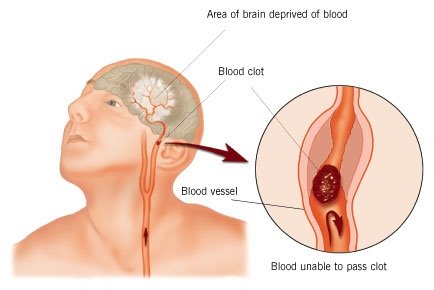
STROKE: Remember The 1st Three Letters...2006
STROKE IDENTIFICATION:
My friend sent this to me and encouraged me to post it and spread the word, I agreed. If everyone can remember something this simple, we could save some folks. Seriously . please read:
During a BBQ, a friend stumbled and took a little fall - she assured everyone that she was fine (they offered to call paramedics) and just tripped over a brick because of her new shoes. They got her cleaned up and got her a new plate of food - while she appeared a bit shaken up, Ingrid went about enjoying herself the rest of the afternoon. Ingrid's husband called later saying that his wife had been taken to the hospital and passed away. She had suffered a stroke at the BBQ. Had they known how to identify the signs of a stroke, perhaps Ingrid would be with us today. Some stroke victims don't die, they end up in a helpless, hopeless condition instead.
It only takes a minute to read this...
A neurologist says that if he can get to a stroke victim within three hours he can totally reverse the effects of a stroke . . . totally. He said the trick was having a stroke recognized, diagnosed and then getting the patient medically cared for within three hours, which is tough.
RECOGNIZING A STROKE:
Thank God for the sense to remember the "3" steps.
Read and Learn!
Sometimes symptoms of a stroke are difficult to identify. Unfortunately, the lack of awareness spells disaster. The stroke victim may suffer severe brain damage when people nearby fail to recognize the symptoms of a stroke. Now doctors say a bystander can recognize a stroke by asking three simple questions:
S *Ask the individual to SMILE.
T *Ask the person to TALK, to SPEAK A SIMPLE SENTENCE. (Coherently) (i.e. . . It is sunny out today)
R *Ask him or her to RAISE BOTH ARMS.
NOTE: Another 'sign' of a stroke is this: Ask the person to 'stick' out their tongue . if the tongue is 'crooked', if it goes to one side or the other, that is also an indication of a stroke.
If he or she has trouble with any one of these tasks, call 911 immediately and describe the symptoms to the dispatcher.
A cardiologist says if everyone who gets this e-mail sends it to ten people, you can bet at least one life will be saved.
Tuesday, April 11, 2006
The Garden School Tattler

This is a picture of JFK's grave.
Mondays are tough on little kids. Whatever the mood at home was over the weekend is left over on Mondays in the child's mind. It's the cat herding game. We read books in our class again today and it was a slow go - like they had never done it before - until I got the candy box out.
We did a math thing I had to ask Miss Kelly about because it was such a slow go, I thought perhaps it was way way over their heads. Mrs. St. Louis has a number chart to 100. It has columns and rows. The numbers go left to right from one to 10 and then left to right 11- 20 and all the way down to 100 in the right bottom corner.
Because it begins with one at each row, the columns are also identifiable as 4's, 5's, 6's, etc. 26, 36, 46, 56, are all in a row going down, so asking the group what 26 is, and then the next 36 should have been a fun game, but even when I got their attention, it was a slow go. Abby won an egg because she was the only child in the class who could match a flashcard with a space on the chart. We will play with this again today.
We will be sending home a list of words to play with. The children should be able to read some words we have studied in the classroom. It would be fun to let them build sentences at home.
I'm writing a series for WFIE on the state of childcare locally. If anyone has anything to add, please let me know. Part of the problem of staffing locally is the inability to pay. Paying an employee is a matter of respect. Who do we respect and what are we willing to offer? What do you think your childcare provider makes and what are her expenses for working? When you think of the money poured into early childhood and you look at the toy status, and you look at pay and you look at food, where is the money going? Is it going to the children via good care or is it disappearing into the "programs" no child ever sees?
I'd like to get two baseball teams started at school. We need a T. I think a rubber plumbing pipe sunk into a bucket with concrete ought to do it. Anyone volunteer to make one? I have the baseballs. We need a few mitts and some giant beanbags for bases and some pennies. Kids will play so long as the game moves quickly and they understand what they are supposed to do. This is something we could do all summer.
This month is spring sing and the kids have chosen a lot of the songs. The ones they have liked this year are the songs we are singing. I'm sending home some parts to work on.
We're still working on the summer program. Gas is really rising, and that's a problem. One of the things we thought of was to add some fun to the children's day were some "in school" activities we haven't done for a long time like pulling taffy and making boats to sail and then sailing them in blow up pools. We're putting our heads together to make this an outstanding summer. Please offer ideas as they come.
Sunday, April 09, 2006

Thanks Hadley for the birthday greeting. I love you!
This is an interesting piece because once again it's wrong. Labeled with intent to label!
I think what legislators don't realize is that the investment of learning for a child ages 3-7 is not one for the future, but one for the present. Young children don't begin to learn at 7. They learn from conception, and the ability to retain knowledge and build on what they do comes at varying ages. The idea that we would "educate" children at 3 so that they will be ahead at 7 is barbaric.
Ahead is only doable if the home is academically bent. You could put a dictionary into an infants hands and read Shakespeare to him non stop for ten years, but if the parents are not readers, the chances that he will be a lover of literature is slight.
The whole project of education is "an investment" but not in the future. It's an investment in the individual child with the hope that at the formative years - 3,4,5,6,7 - not 7..., something that will move them for a lifetime will take root.
This is a picture of the Tomb of the Unknown Soldier.
Compulsory attendance deserves F
By Michael Smith
April 3, 2006
Every year, in state legislatures across the country, numerous bills are introduced aiming to lower the compulsory attendance age for children to enter school and lowering the age for state-funded kindergarten. These types of bills have been introduced this year in Colorado, Hawaii, Idaho, Minnesota, New York, South Carolina and South Dakota.
The argument for placing increasingly younger children into school is that it will improve academic attainment. It is believed that because of their early entrance, the children will be ready to learn when they enter the formative years of education. The idea of preschool is not original to the United States.
In Europe, where governments provide care and schooling for children as young as 1 year, billions of dollars are spent on these programs designed to give children a head start in their education and socialization. Questions are now being raised, however, whether early entrance into school actually accomplishes the desired purpose.
In 2000, the Program for International Study Assessment (PISA) compared the academic scores of children from 32 industrialized nations in reading literacy, mathematics and science. The results showed that children who have to start school at a very young age do not consistently outperform those who start later.
In a 1999 study reporting the Third International Mathematics and Science results (TIMS) for the eighth grade, a comparable result was found. Despite having a compulsory attendance age of 7, which is later than almost any other European country, Finland held the top ranking in all test subjects.
Singapore, which also scored high in the PISA and TIMS assessments, does not have any publicly funded early education programs. On the other hand, Sweden, which has some of the most comprehensive early child care programs in Europe, was one of the lowest-scoring nations.
Closer to home, studies of early childhood education indicate it might not be in the best interest of children. David Elkind, professor of child development at Tufts University, wrote in 1987: "When we instruct children in academic subjects ... at too early an age, we miseducate them; we put them at risk for short-term stress and long-term personality damage."
In a 2005 Stanford University/University of California research study, "The Influence of Preschool Centers on Children's Development Nationwide," it was reported: "We find that attendance in preschool centers, even for short periods of time each week, hinders the rate at which young children develop social skills and display the motivation to engage in classroom tasks, as reported by their kindergarten teachers."
The Home School Legal Defense Association opposes these attempts to mandate early attendance for three basic reasons. First, there is not enough conclusive research data to prove that earlier is better for children. In fact, we're now seeing that earlier may be worse for many children. Until there is conclusive evidence that mandated early childhood education in schools actually increases academic performance later, no state should fund mandatory programs.
Second, mandating early attendance violates parents' fundamental, God-given right to direct the education of their children as guaranteed by the Fourteenth Amendment.
Third, the high cost to taxpayers to fund earlier and earlier entrance of children into school cannot be justified. In 1991, a bill was introduced in the Alabama legislature to lower the compulsory attendance age. The Alabama legislative fiscal office was asked to determine what it would cost the taxpayers to fund the program. The estimate was $4.7 million a year (1991 dollars).
It's time for state legislators to make sure that lowering compulsory attendance ages is really in the best interest of society before asking the taxpayers to foot the bill. Every taxpayer should ask their legislators whether these programs are a good use of funds.
Michael Smith is the president of the Home School Legal Defense Association. He may be contacted at 540/338-5600; or send e-mail to media@hslda.org.
The Garden School Tattler
 I was surprised to read the comment on the blog that included parrot bashing. Most of you don't know that Edith and I have thirteen parrots at school. Most of them were born at the school and as they come out of their nesting boxes, Edith's delight is always worth noting. "Oh, look at him. He's beautiful." Parrots are stunning birds right from the git go.
I've owned and raised parrots for over thirty years. Parrots are one of the most interesting and intelligent birds I know. I've also raised robins and starlings (starlings are outstanding animals) and chimney swifts. But parrots are my delight because they are so funny and so beautiful. At home I have a walk in cage. It's empty now, except for an occasional sick wild cat, and my parrots are all down at school in a double wide walk in Robby made.
If you are looking for a gift animal for a child, a love bird makes a wonderful pet. They are best when they have someone to love - like another bird. They climb more than they fly, so a long cage is a good idea. Parrots are wonderful flyers. They have a strong body and take to the air with great delight. They appreciate being allowed to fly and will fly around the house if given a chance. I think with someone at home most of the time, one would only need a nesting box mounted on a high wall and not a cage at all.
Parrots are funny animals. They will approach nearly any food with interest and will "share it with you." They are very loyal, very endearing and very long lived. Their health is a matter of good seed, a cuttle bone, gravel and grit and good clean water. They will take care of treats all by themselves if given a chance. Watch the fruit bowl!
The problem with parrots is not the mess as you would expect - they are fairly clean birds and their droppings actually make excellent plant food. It's their call. Parrots are loud! They have a shrill monotone voice. Unlike a song bird, their deep demanding voice seems to caw rather than call. They seem to caw first and then copy a little like a dirge. It seems a bit lacking in creativity. I've always wondered if putting a song bird close to them would change the dirge.
Now to move from parrot bashing to something of substance. Images. An image is a writer's description that allows someone to see what they see. A cash register receipt has no images. A poem is full of images. A well written piece for a column has a variety of news, information and images to make people laugh and to make people think.
People who know me know I love an image. But an image is not a category, a pigeon hole or a label simply because an image is ever changing. It's a glimpse, a peek at something, and in the next seconds it could change. A label is a unfair assault on the ability of a human to make changes. "He's retarded!" "She's a labeler." "He's stupid." We once had a young teacher who could not refrain from labeling everyone around her, and when she was taken to task for this, she left the school and began to label us in a most disturbing way.
We've had a lot of children come through the school who have been labeled by psychologists, social workers and other teachers which is unfortunately a crutch for people in those jobs who are uncreative enough to use images. We always nod graciously at the labels and go about doing our own thing. Mostly, the labels can be pealed off with enough images.
But no harm done. It's a beautiful day and my family has already gathered today. My husband gave me a lovely bird feeder for my birthday with a cat on it. William took the tape measure outside to measure the cat. Jack got out the deck of cards to practice his tricks, and Molly and Rob drank coffee with me. Katy left for Alabama today just as Brendan called from Jacksonville and I got to talk to Elizabeth. Anne hopped in the jeep to go shopping for my barbecue later. It's a faculty fest. See what happens when you let them grow up with a lot of freedom? They experience life with great gusto.
By the way, the picture is of the last battle site in Gettysburg. There were originally 90 cannons. It was sad. Katy and I took a long two hour car tour of the whole battle ground. More pictures to follow. It was eerie and sad - not to label but to draw an image - it was whistlingly eerie with strange shadows and an intermittent stillness. If you listened, you could hear the cries in the wind. The terrain differs greatly from large open fields to hilly and rocky sites where some of the bloodiest battles were fought.
Friday, April 07, 2006
The Garden School Tattler
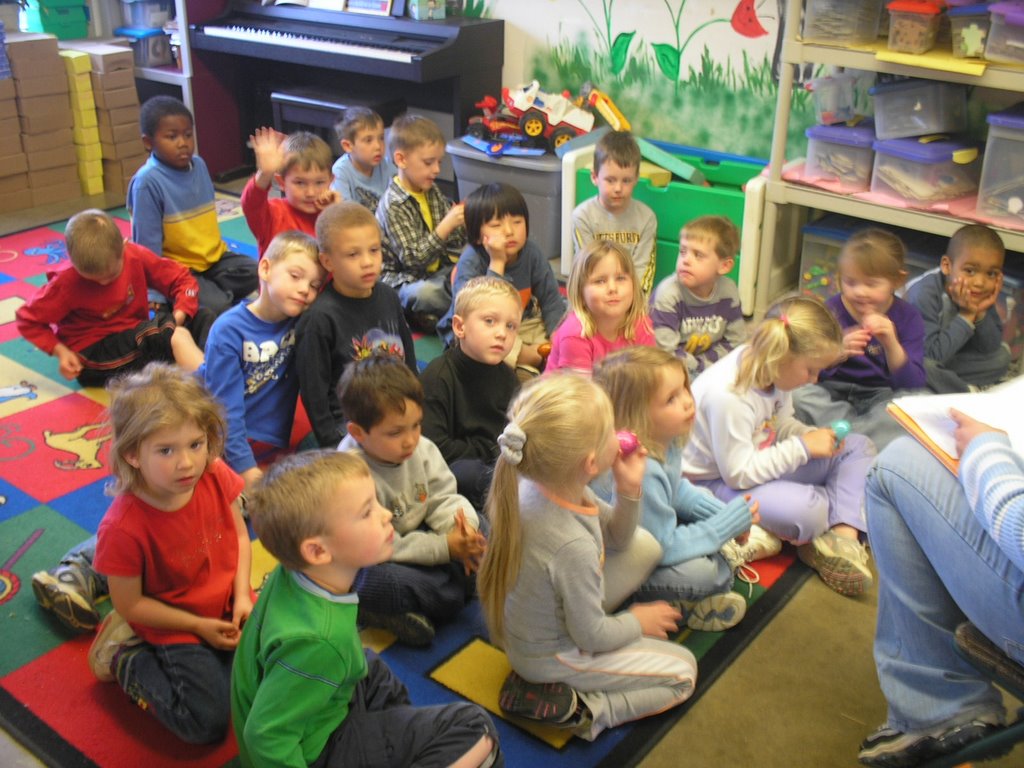 What a lovely response to the last post. Thank you former parent. Blessings on your family.
I suppose we should just change those classroom designations and call them the Silver Room and the Gold Room. Mrs. St. Louis can call her class the Angels. The question of what goes on in those rooms would be the question most parents would ask, and the answer is kindergarten and first grade, so the circle goes round and round.
More than anything else, our curriculum is made for the individual child. We have a child who informed us about a week ago that he is smarter than both his parents and certainly all his teachers. "Great," I said, "That's just what I want to know. Tomorrow, you can do what scholars do - independent study. I'll show you how tomorrow."
So the next day, I told him to choose a book in the school from any of the libraries. "Science, history, geography, children's shelves, teacher's shelves - go choose, and he did. He chose a book off the science shelf about the sun.
"I want you to read as much of the book as you need to read to write three sentences. Then I want you to draw a picture of what you think the book said."
In two hours he accomplished nothing.
"Self discipline is part of scholarship," I remarked briskly. He gave me a wicked look. "Smart people finish assignments." Scowl, scowl, scowl.
Truly it was funny. He was torn between two lovers - feeling like a fool. He was torn between pride and humility. Pride won. And pride that wins most often makes us look small again. I tried to explain to him that he has the brains and wit to accomplish great things, and this little assignment could have offered him a way and means and a scheme to learn more than any other child in the school, and through humility and duty he could achieve so much, but he preferred to succumb to pride and sloth. It is better to brag about one's brain than to do the work necessary to use it.
It reminds me of two students we had last year. One could read anything in print. He actually read Chaucer in Middle English. And we had a little girl who was "learning" as she said to read. When it came time for the play, I asked the boy, because he was the better reader, to read the little Angel intro to the play. I noticed that he continued to mispronounce the same difficult words. He was absent one day, and I asked the girl to read for him. When she began, I began to listen carefully. She read slower than the boy but she didn't mispronounce the words. And when I took each aside and asked them what they were reading, only she understood. He read like a parrot, she, like a scholar. She ended up reading the intro for the play. Both children were six.
Teaching children is not a "this then that" approach. Covering a text book and a list of "to dos" won't cut it. Teaching why we learn, and what to look for when we learn, and being able to verbalize what has been learned as well as write about it is real learning. This starts at age three not thirteen.
One of my interests is how the eleven passions play off the virtues and the vices in every person I work with. Using the passions to attract virtue begins in the infant years. Virtue is a big part of growing up and staying up. It's the gasoline for scholarship and the sign of being an adult.
Thursday, April 06, 2006
The Garden School Tattler

Yesterday in class we had some frustrating tears over a paper a lot of the kids took for granted and then when they couldn't do it, just went to pieces.
The dot to dot paper was a lion with numbers from one to one hundred. "Let's take this paper one part at a time," I said, "So first thing is to choose a yellow, orange or brown crayon."
Some of the kids picked up green markers, some picked up pencils, and some actually did what I asked. Two children started the dots randomly. "Is that what I asked you to do?" Big surprise. Listening and following directions was going to be a battle yesterday.
"Here's what I want you to do. Find the number one and put your finger on it. Now go to 2, 3, 4, 5, 6, 7, 8, 9, and finally 10. "Draw a circle around the 10" Half the children had connected the dots, some with pencil, some with marker and only two circled the ten. "Is that what I asked you to do?" Then we connected the dots to ten and began again. Put your finger on the 10, now find the 11, the 12, the 13, 14, 15, 16, 17, 18, 19, 20 and circle it."
Well you would have thought I was preaching Greek. The tear started to flow. "I can't do this." I mentioned that we had just played Bingo with the same numbers and most of them got it right.
"You can do this if you follow directions. How many of you have already filled in the dots to 20?" Most raised their hands. "Is that what I asked you to do?"
When we finally got to sixty, and they finally started to "do what I asked them to do," they began to get it. They began to see that first we find the numbers; we're careful; we look; we search; we're sure before going on. We look not for the tens number but the ones and the ones keep repeating themselves which is what I really wanted them to see. We will do the same paper today and keep doing these dot to dots from 1-100 until they see that between any ten numbers the ones will repeat.
So why keep plugging? They are only little kids and maybe this is too big for them. Because once we get by the tears, the triumph is just behind it. It's the triumph of the human heart. How big is my heart? Many of them learned a little lesson yesterday. "If I keep working, if I continue to try, if I don't give into my worst temptations - to quit - I will triumph," and they did.
After we slogged through that trial, we did an art drawing. They all wanted to know how to draw a chair earlier, and so I gave them 3-D directions for both a chair and a table. They followed directions like their lives depended on it, and they all discovered a table and a chair at the end of their short lesson. Then they drew Easter bunnies on the table and some got creative.
Working with children is sometimes like herding cats. But when you pull out the food, they usually get organized. In this case, the food was knowledge, and once they realized it was worth doing, they wanted it.
Later, after a chicken lunch with stuffing, fruit, and a big salad which seems to be the favorite these days, the children jumped the Hopining. They put forth the same effort in the afternoon that they exhibited in the classroom earlier. I was stunned by their fortitude. Not a single child wimped out. Each one hopped at least close 200 times in three minutes, and Jalen in Mrs. St. Louis's class jumped 500 times. He was outstanding. He jumped just like a boxer, neatly, evenly, and his jumps were about 1/2 and inch off the ground.
These are really really good days in school. We're studying music and yesterday we listened to Gregorian Chant. It was the first written music in the West. Today we will listen to Renaissance music - the Madrigal and Dance music. We will listen to both to compare. We added finger cymbals and triangles yesterday to try to accompany the chant. It was fun. Today, we will dance. This ought to be rich. You're all invited. I'll take pictures and report back later.
Wednesday, April 05, 2006
The Garden School Tattler
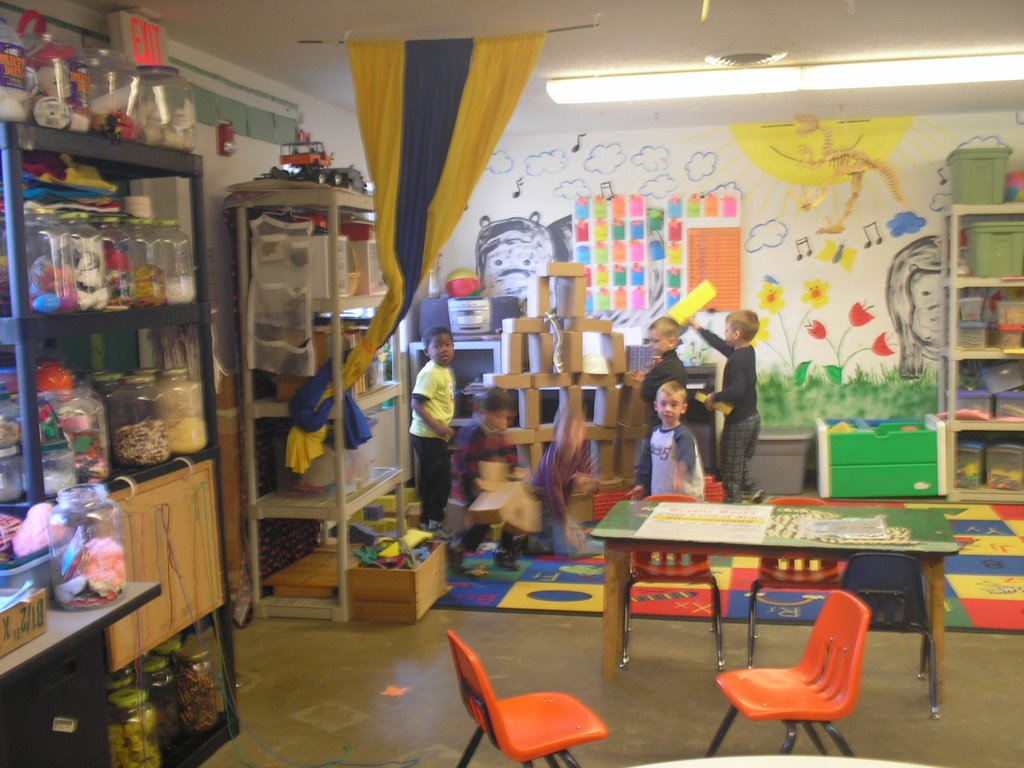
There have been a lot of good questions about school changing lately, and here's how it is:
Yesterday at the Garden School my kindergarten class read their first book. My class is comprised of 4 and 5 year olds. We did a number puzzle to 100 as well. Most children 4-5 would be learning letters, learning to write their names. Every day my class does a piece of writing work. Children who come to my class need to know their letters - upper and lower case, write their names and count to 20.
In Miss Kelly's class, ages 5-6, the children are doing first grade work.
Age plays an important role in schooling. What we've found is that the normal curriculum for the public schools is geared for children who have not had preschool. The kindergarten work is simple. At the Garden School, our work is much more advanced.
In addition, our "out of the classroom" activities teach as well. We have a thing called Scholar's Club that is designed to teach the children about the world. It takes in science, geography, history, religion, and fine arts. These are things that are not a part of the kindergarten curriculum in other places, but an important part of our day.
When we do the play, we often don't go into the classroom because we are working on the production. But producing a play is a whole experience children need to experience early. This kind of activity often stimulates a child into a lifetime of interest.
If work sheets and copy pages were all there was to education, I'd say we lacked considerably, but we feel that a liberal arts education right from the beginning of education is the way to interest children in learning.
As far as "promotion" goes. We can only recommend. The principal of any school makes the final decision for "his" student. I can't tell another school what to do with a child. I know that over the years many of our first graders have gone to second grade. Many of the younger ones have gone to first grade again simply because the principal of another school thought the child was too young.
I've often thought we should change our classroom names from kindergarten and first grade to other classroom names because although our children do kindergarten and first grade work, often they are younger than their public and parochial school counterparters.
Why do we push? Because we let the child lead. If a child is ready to do the classroom work, we welcome him or her. The desire to learn is very keen in young children. The desire to understand is also keen. What is the point in delaying learning because of age? Would you hold back a 18 month old child who was taking his diaper off to use the bathroom on his own? Would you keep a five month old from crawling if he was ready to take off? My son crawled at two months. Was I supposed to put a weight on him?
One of the things we require of our teachers is a knowledge of the world. This is something we find most teachers don't learn in college. Most people can't answer the simple questions we ask when we interview and what we are looking for is that special teacher with an eye on the world and a grasp on the classroom. When we pull out Pointillism, we expect our teachers to either know what we are doing, or have an interest in learning. When I say, "It's time to study the Norman Conquest," I expect my teachers to know what that is and when it happened.
The Garden School is a year round school. That means we have school all summer. So in the winter we can take off some days to do other things like the plays and like holiday in school days.
But that doesn't mean children aren't learning. Remember that copy pages are only 8x11 and there is a whole world out there.
One of the things we have been able to do with some of the children is to take labels off. We have had several children come to the GS with labels like retarded and special needs. One of my favorite children was slated for an institution by two psychologists. At least a dozen children with those ungracious titles have gone to regular classrooms over the years including the little girl slated for an institution. This means a lot to us because it's through the kind of special work we do that good things happen, and we hope good things happen to all our children.
As for accreditation: That has always been a problem because kindergarten is still not mandatory in Indiana, so a kindergarten is not accredited. We have spoken to the state about our first grade program but they recommended we not apply because we would have to group the children by age. That's not what we do. So there is really no one to accredit us even if it were possible.
What we go by are the State of Indiana Standards. We exceed those standards. If anyone from EVSC were to come to the GS on any day, they would approve of what we do. I know we had some people in from the State Board of Education from Indianapolis a few years ago and their remark was, "This is an outstanding school. I wish there were more like it."
With all the hubbub about all day preschool in so many states, I think it's time to invite the governor to see what can be done with a little private industry and a love of teaching, but that's a whole other story.
The Garden School is not for everyone. It's not a place to "dump and run." It takes a lot of parent involvement to make it go, and that's what we count on. But I can assure anyone who asks, we will continue to do our own thing because it is superior to what's out there and we think this with good reason.
Tuesday, April 04, 2006
Garden School Tattler
I'm back - just. It was a splendid few days away, and Katy and I enjoyed everything we did. The thing I enjoyed most was the antiquity, and I realized it is possible to live well in the 21st century and still surround yourself with the past. The question is why would anyone want to do that? And I think the answer is "so don't forget."
The struggle, the work, the human effort put into the life unforgotten in all those places is without measure, and it is through this example that we can best grow into the best people we can be.
In this very modern city children were lost. The historic places like Mount Vernon had not a single thing to say about children. Who were the children? Nobody knew. From reading, I know that the children were a very important part of our founding parent's lives, and yet one would little guess that today with the restoration efforts.
Bridging the gap between history reclaimed and history in the classroom is hard sometimes, that's why the little domestic things are so important. I carefully studied the homes, the art work on the walls, the little things children would have held dear, and the configuration of rooms that they would have run about in. I know the history because I've read it, but I wanted to see the places and Katy and I managed to visit some of them including Mount Vernon - picture.
We visited Mount Vernon. The farm was really interesting. It all began with four rooms smaller than mine at home. Washington had slaves. Two did the washing, and six did the knitting and more did the cooking and the household chores. It was a way of life. More about the trip later.
This month in school is music month. We'll spend the whole month working on the concepts of music. Yesterday we talked about instruments. Today we will learn to play some.
It was hard getting back to work yesterday, but we managed rather nicely.
Subscribe to:
Posts (Atom)