Wednesday, September 22, 2010

Wonderful Wednesday

From a Romanian Newspaper
:

We rarely get a chance to see another country's editorial about the USA


Read this excerpt from a Romanian Newspaper. The article was written by Mr. Cornel Nistorescu and published under the title 'C'ntarea Americii, meaning 'Ode To America ') in the Romanian newspaper Evenimentulzilei 'The Daily Event' or 'News of the Day'.


~
An Ode to America ~


Why are Americans so united? They would not resemble one another even if you painted them all one color! They speak all the languages of the world and form an astonishing mixture of civilizations and religious beliefs.

On 9/11, the American tragedy turned three hundred million people into a hand put on the heart. Nobody rushed to accuse the White House, the Army, or the Secret Service that they are only a bunch of losers. Nobody rushed to empty their bank accounts. Nobody rushed out onto the streets nearby to gape about.


Instead the Americans volunteered to donate blood and to give a helping hand.

After the first moments of panic , they raised their flag over the smoking ruins, putting on T-shirts, caps and ties in the colors of the national flag. They placed flags on buildings and cars as if in every place and on every car a government official or the president was passing. On every occasion, they started singing: 'God Bless America !'


I watched the live broadcast and rerun after rerun for hours listening to the story of the guy who went down one hundred floors with a woman in a wheelchair without knowing who she was, or of the Californian hockey player, who gave his life fighting with the terrorists and prevented the plane from hitting a target that could have killed other hundreds or thousands of people.

How on earth were they able to respond united as one human being? Imperceptibly, with every word and musical note, the memory of some turned into a modern myth of tragic heroes. And with every phone call, millions and millions of dollars were put into collection aimed at rewarding not a man or a family, but a spirit, which no money can buy. What on earth can unites the Americans in such way? Their land? Their history? Their economic Power? Money? I tried for hours to find an answer, humming songs and murmuring phrases with the risk of sounding commonplace, I thought things over, I reached but only one conclusion... Only
freedom can work such miracles.


Cornel Nistorescu

Tuesday, September 21, 2010

Tuesday's Teacher

This a cute and informative article well worth reading: It's from Food Navigator

Why cavemen could hold the key to healthy eating

By Jess Halliday

20-Sep-2010

Related topics: Science & Nutrition

There’s something incongruous about the hi-tech modern food industry sniffing around the Palaeolithic era for the next big consumer trend. But hold the side order of cynicism. There might just be some logic to good old-fashioned instinctive eating.

Unilever has unveiled a new research programme that aims to re-create the diet of the caveman and apply modern biological science to it in the hope of unlocking some long-forgotten dietary knowledge that was instinctive to our ancestors.

The idea of eating like a caveman is nothing new. Gastroenterologist Walter Voegtlin first published The Stone Age Diet book in 1975, and other researchers have picked up the trail. US-based independent research group Paleobiotics Lab, has also been flagging up the heavy load of prebiotic fibre inulin in our ancestors’ diets, and the benefits it can bring.

Like many off-beat new trends, it has been a way of life for a handful of health fanatics for decades.

But are we ready for it to enter the mainstream? Your average caveman couldn’t have had a more different diet to the way we eat today. Tonight’s dinner may be a ready meal with an ingredients list as long as your arm – when once it would have been an armful of berries picked from a shrub.

Unilever’s new inspiration is not completely out of left-field.

First, the natural trend has been gathering pace. We have started to snub those complex ingredients list, preferring them to feature foods we actually recognise as foods. How more natural can you get than to eat like your ancestors, who would have had no idea what an E-number is, let alone how to skin it.

Nostalgic eating, too, has been a big hit. Especially in the recession, we have sought simplicity and savings by digging out our grandmothers’ old-fangled recipes. And once we have had our fill of braised offal and apple pie, what about Granny’s Granny’s recipes… and all the Great-Grannies going back 1200 generations?

Unilever is looking at a time when filling your stomach was a full time occupation. If you got the nutritional balance wrong or plumped for the wrong berry, the consequences were – a horrible death.

Instinct, then, was a pretty crucial life skill.

The Palaeolithic era was also the time when the human genome was set. And by gum, evolution just hasn’t been able to keep up with fast moving consumer trends since then. We’re pretty much the same human beings as our ancient ancestor – just with worse spear skills but considerably better at manoeuvring a supermarket trolley.

The ability to eat instinctively for our genes has been largely crowded out by a sensual confusion of branding, tastes and textures. The outcome? Well, heart disease and cancer aren’t pleasant ways to end your days.

What we have instead of instinct is an armoury of technologies that can be turned back to basics. Archaeologists, anthropologists, evolutionary geneticists, food scientists, botanists… that’s the team of intrepid investigators Unilever has put together for its foray into diets past.

We can’t turn back eating habits 12000 years and we probably wouldn’t want to. I would rather my local supermarket ran a special on mammoth chops any day than have to go out and hunt them myself.

But we can certainly use today’s techniques to mine knowledge from the past, and use it to make better food in the future. Working together these scientists might, just might, unearth the long-lost secret of optimal nutritional need.

If it comes with a cute picture of a caveman on the package, I’d buy it.

Monday, September 20, 2010

Monday's Tattler


This week is going to be a hot one. Please dress your child in shorts and a t-shirt that has sleeves. Shoes and socks are always required.

Grandparents' Tea is this Friday. Every child is required to have an attending adult. The tea begins at 3:00 with a little program. There is a party after. Please bring a little treat to share. It doesn't have to be huge. A bag of chips, a plate of cookies, cupcakes or some fruit is a great way of sharing!

This week we are looking at the idea of community. Who is my community? This is a good discussion question to actively involve your child.

There are no field trips this week.

We will be trying some new foods this week. We hope your child is enjoying his meals at the Garden School. Nutrition is an important part of your child's development. Trying new foods, enjoying healthy foods is an investment in his life.

We hope you have a great week. We are looking forward to sharing time with your family on Friday.

Sunday, September 19, 2010

Sunday's Plate


One of the questions I've been asked lately, is "When I go to the store, what do I buy to make a successful week of really good meals for just two people? I work full time and am tired when I get home, so quick and easy is my theme song. Going to the store is frustrating because it all looks so complicated. "

This is a really good question because for most people who cook only when they have to, a huge and beautifully set up store looks like Willy Wonka's World. There is just too much, and most of it is not defined or looks precariously hard to manage.

For as long as I can remember, I always bought, and still do, a regimen of things so that all the foods can be enjoyed every week. I buy beef for Mondays, pork for Tuesdays, cheese and eggs for Wednesdays, chicken for Thursdays, and fish for Fridays. This is a great plan for families, but when family is two or even one on some nights or weekends, it's just too much to think about.

But still, creating a regimen for a week would be a good idea. If you shop on Saturdays, pick something that you like to eat. Let's pick pork chops. Then pick out a grain product to go with it: rice, noodles, gnocchi, or perhaps potatoes. Then pick out a vegetable you like - broccoli.

The goal is finding the right amount to cook one day that will last the rest of the time you are home during the week. Four ounces of meat for an adult and two ounces of meat for a child is the right nutrition, so start there. If you will be home three days this week with your child, you need to buy 18 ounces of meat. If that is not enough for you, then buy what you need. Cook the whole thing and refrigerate.

Do the same thing with the broccoli. One cluster of broccoli will be fine for a meal. So buy three. This does not have to be cooked all at once. Use one cluster at a time.

Do the same with the grain or potato. Buy enough for three meals. Make rice up at the same time. It refrigerates for a week. So does pasta. Potatoes are easier because they take just a few minutes in the microwave.

One meal can be whole pork chops, rice, and broccoli. Buy a can of cheese soup, or nacho sauce and use it as a pour on additive.

One meal can be cubed pork chops over the rice and chopped up broccoli in a stir fry. Soy sauce really makes this dish. Use a few tablespoons of butter and a couple of tablespoons of soy sauce as the cooking liquid before adding your rice, meat and broccoli.

One meal can be the pork chop sliced and eaten in a flour tortilla. Mix the last of your rice and broccoli with some shredded cheese and nuke for about a minute.

Once your cooking is done, it's easy to come up with ways of using already cooked food.

Cooking should be fun and something that doesn't take a lot of time or energy.

Friday's Tattler

We had a very nice week.

On Wednesday, Miss Nita called a costume day. The kids took great delight in dressing up. It was last minute, and we appreciate all the work parents did to make this a special day for the kids. We had all kinds of costumes, and each one was more precious than the next.


On Tuesday, we had a visit from the Red Cross. The children enjoyed the information the Red Cross had to offer. On Thursday, we had a visit from the Ambulance service. The children all enjoyed seeing the truck, and visiting with the Ambulance personnel.

On Friday, we had our Knowledge Bee. The winners were Jill, Hailee, Jack, Ely, Garrett, and Makenzie. These children answered a myriad of questions and won a star for their medals.

We have had a lot of misconceptions about medals among parents and teachers. Medals are really called Honors Medals. When a child walks into school in the morning, it is taken for granted that the child is honorable and deserves to wear a medal. Lately, we have been taking medals for light reasons, and that's not what it's about. Children must be directed towards good choices and good behaviors. The three reasons to lose a medal are: making another child cry on purpose, continued disobedience or disruption so that too much time is directed away from the group and onto one child. We are a group activity place. Our job is to civilize children to go successfully off to school.


Wednesday, September 15, 2010

Wonderful Wednesday

From a Romanian Newspaper

We rarely get a chance to see another country's editorial about the USA


Read this excerpt from a Romanian Newspaper. The article was written by Mr. Cornel Nistorescu and published under the title 'C'ntarea Americii, meaning 'Ode To America ') in the Romanian newspaper Evenimentulzilei 'The Daily Event' or 'News of the Day'.


~
An Ode to America ~


Why are Americans so united? They would not resemble one another even if you painted them all one color! They speak all the languages of the world and form an astonishing mixture of civilizations and religious beliefs.

On 9/11, the American tragedy turned three hundred million people into a hand put on the heart. Nobody rushed to accuse the White House, the Army, or the Secret Service that they are only a bunch of losers. Nobody rushed to empty their bank accounts. Nobody rushed out onto the streets nearby to gape about.


Instead the Americans volunteered to donate blood and to give a helping hand.

After the first moments of panic , they raised their flag over the smoking ruins, putting on T-shirts, caps and ties in the colors of the national flag. They placed flags on buildings and cars as if in every place and on every car a government official or the president was passing. On every occasion, they started singing: 'God Bless America !'


I watched the live broadcast and rerun after rerun for hours listening to the story of the guy who went down one hundred floors with a woman in a wheelchair without knowing who she was, or of the Californian hockey player, who gave his life fighting with the terrorists and prevented the plane from hitting a target that could have killed other hundreds or thousands of people.

How on earth were they able to respond united as one human being? Imperceptibly, with every word and musical note, the memory of some turned into a modern myth of tragic heroes. And with every phone call, millions and millions of dollars were put into collection aimed at rewarding not a man or a family, but a spirit, which no money can buy. What on earth can unites the Americans in such way? Their land? Their history? Their economic Power? Money? I tried for hours to find an answer, humming songs and murmuring phrases with the risk of sounding commonplace, I thought things over, I reached but only one conclusion... Only
freedom can work such miracles.


Cornel Nistorescu

Tuesday, September 14, 2010

Tuesday's Teacher


Published Online: September 13, 2010 By Education Week
Updated: September 13, 2010

Few Changes on SAT Posted by Class of 2010

Comment: If you are wondering why we push reading, writing and arithmetic from age three, this is why. Read on, McDuff...

Scores on the SAT improved a little in mathematics in the past year, but remained flat in reading and writing, results released today show.

Students in the graduating class of 2010 who took the college-entrance exam during high school produced an average score of 516 in math, 1 point higher than in each of the previous three graduating classes, but still 4 points lower than the decade’s high point, 520 for the class of 2005, according to results released by the College Board, which sponsors the SAT.

The class of 2006 was the first whose score report reflects a newly reworked SAT, which includes higher-level math questions as well as an essay-writing section.

Last spring’s graduates turned in an average score of 501 on the reading section, the same as the class of 2009, a point lower than each of the two previous classes, and 7 points below the high of the class of 2005.

The average score on the writing portion of the test was 492, continuing a steady decline since it was first given five years ago.

SAT Participation and Scores

Each section of the test is scored from 200 to 800.

The test-taking patterns of the class of 2010 mark the first time that the SAT has slipped behind its rival college-entrance exam, the ACT, in popularity. The ACT has been gaining ground, fueled in part by a growing list of states that administer the exam to all juniors or seniors.

In the most recent graduating class, more students took the SAT than ever before—1,547,990, by traditional College Board cohort measures. But nearly 21,000 more students took the ACT, which last month reported total participation of 1,568,835 for the class of 2010. Equal proportions of the class of 2010—47 percent—took the ACT and the SAT. In 2005, 49 percent of the graduating class took the SAT, compared with 40 percent for the ACT. ("Rate of Minorities Taking ACT Continues to Rise," Aug. 25, 2010.)

New Numbers Reported

The raw-numbers comparison between the SAT and the ACT changes, however, if a typically excluded group of SAT-taking students is counted.

In past years, the College Board has excluded from its national report the scores of students who take the SAT for the first time in May or June of their senior year. This year it supplied the number of students in that group—49,339. With those students counted, about 28,500 more took the SAT than the ACT.

The College Board did not include the scores of those “later-testing seniors” in its detailed trend analysis to allow consumers to compare this year’s results with those of previous years.

In a conference call with reporters, company officials said they reported the additional group this year—and will include them in trend analysis beginning next year—because they have been noticing an increase in that group of test-takers—44 percent since the class of 2006 took the exam, said Laurence Bunin, a senior vice president at the College Board.

Mr. Bunin attributed the change to growth in the number of students thinking about preparing for college, a shift he welcomed as “positive news” in the nation’s push toward better college-completion rates. If the later-testing seniors’ scores are factored in, the average SAT score in each of the three tested areas drops by 1 point, a result Mr. Bunin said was not surprising since those students “may not have been focused on college preparation” until later in their educations.

One area of concern highlighted by College Board officials was the writing exam. Of the three areas tested, they said, it is the most predictive of success in students’ freshman year in college. For that reason, and because it is an “essential skill” in careers, the fact that scores have been steadily dropping every year that test has been given is of particular concern, Mr. Bunin said.

“The downward trend must be reversed,” he told reporters. “Writing must be made a higher priority in secondary and K-12 education.”

Gaps Persist

Students from some racial- and ethnic-minority groups, and those from disadvantaged families, continued to turn in lower SAT scores on average than those of their white, Asian, and more-affluent peers, patterns that have held their shape for the past decade.

In reading, for instance, white students’ average score was 528, and Asian students’ was 519, compared with 454 for Latino students and 429 for African-Americans. In math, white students outscored blacks by 108 points and Latinos by 69 or more points. Asians’ average math score was 55 points higher than that of white students.

Officials of the New York City-based College Board noted that the population of students taking the SAT has become increasingly diverse, with racial- and ethnic-minority students making up nearly 42 percent of the test-takers in the class of 2010, up from 40 percent the previous year and 29 percent in 2000.

Students’ scores continued to reflect their family income and parents’ education. Those in the lowest-income brackets, and whose parents had the least education, scored 125 points or more below their peers at the top of the family-income or parental education grid.

Clear correlations existed, as well, between students’ scores and their coursetaking patterns: Those who took more years of math or English scored better than those who took fewer, and those who took Advanced Placement or honors courses scored better as well. That held true across subjects, too; students who took four years of English, for instance, scored better on the math section of the SAT than did those who took fewer than four years, and those who took four years of math did better on the reading SAT than those who took fewer.

FairTest, a Cambridge, Mass.-based group critical of standardized testing, was quick to jump on the SAT report as a sign that the No Child Left Behind Act, which requires widespread tests as part of school accountability, has failed in its stated purposes: to improve overall student achievement and close racial and socioeconomic gaps.

College Board President Gaston Caperton told reporters that while he wouldn’t dub the law a failure, he thinks it “certainly hasn’t accomplished what we must accomplish in this country. We don’t have enough students going to college. We don’t have them well enough prepared. We have to add a lot more rigor. Kids have to work harder. They have to be engaged and committed. I think it’s a great problem in this country, and something that we all have to work on.”

Monday, September 13, 2010

Monday's Tattler


Good Morning! It's Monday again, and the week ahead seems to be well in the making.

We will do regular classes in the mornings, and then on Monday afternoon, Mrs. St. Louis is going to finish the Creation story. On Tuesday afternoon, Mr. Denny is going to do a class on bones. Then on Wednesday, Miss Nita is going to do a class on the history of costumes. It should be a great week.

We will do the Golden Bead awards this morning, and go over some of the rules the kids seem to break readily.

We need to know our full name, Mom's and Dad's full names, our address, our phone number. Please work with your child.

No field trip this week.

Fiction and Non Fiction are our vocabulary words this week.

Spaghetti, hot dog pockets, bacon pizza, roast chicken legs, and baked talapia are on the menu this week. Lots of fresh fruit and veggies.

Have a great week!

Sunday, September 12, 2010

Sunday's Plate


This weekend, I was shopping for jam, and I realized just how expensive it is. My husband usually buys jam at Aldi's which we call "East Germany" for a reason. As I was musing, I remembered back to a time when I made jam. I never remember it being a tough thing to do. I remember hearing stories from people about making jam in a hot summer kitchen, and how all these ladies would gather around doing various and sundry jobs, and how this huge production would make what amounts to ten jars each and create enough dishes to call it Purgatory.

As a natural simplifier, as a busy person with many interests and not a lot of time, I have to re-evaluate nearly everything, and find an easy precise, timely way to do just about everything. So while I was holding a six ounce glass jar of jam which was mostly sugar and thickener, I put it back and marched over to the green grocer.

I picked up $5.99 worth of strawberries and added them to my cart. Then I picked up a box of fruit pectin. Then, finishing my shopping, I came home.

At home, after putting all the groceries away, I left out the strawberries. Gathering my wits and a heavy bottomed pot, I hulled and cut four cups of fresh strawberries, measured out three tablespoons of pectin, dumped it into the pot with two cups of sugar and brought the whole thing to a boil for about two minutes. Then I ladled the boiled fruit and sugar into some jars, and screwed the lids and put them by in the fridge. I made four half-pints or $24.00 worth of jam for $6.50. Plus I had a third of the strawberries left. Plus the outstanding taste was well worth the fifteen minutes it took to complete the task including the clean up.

Years ago I made jelly from frozen concentrate grape juice and apple juice.

Jars? I store my leftovers in glass because plastic leaches. I always have jars at home, but always canning jars or the big glass jars you find at the Dollar Store. Those are great for storing food - cranberries especially, so you know how many you have.

The whole scheme of jam making is: use half the sugar of the fruit. So if you make strawberry jam, and you are using four cups of fruit, use two of sugar. If you are not using apples, throw in a tablespoon of pectin for every cup of fruit.

Making fruit, just like making bread, or cookies, or cake does not have to be a huge ordeal. It should be a quick, easy, fun gig, you can do while doing something else.

Try it while the berries are still available.

Saturday's Under the Sun

The Sailor Pictured Below Is,

Navy Petty Officer,

PO2

(Petty Officer, Second Class)

EOD2

(Explosive Ordnance Disposal, Second Class)

"MIKE MONSOOR"

April 5th, 1981 ~ September 29th, 2009

cid:1.4193320862@web180615.mail.sp1.yahoo.com

cid:2.4193320862@web180615.mail.sp1.yahoo.com

Mike Monsoor,

Was Awarded "The Congressional Medal Of Honor" Last Week,

For Giving His Life In Iraq , As He Jumped On, And Covered With His Body, A Live Hand Grenade,


Saving The Lives Of A Large Group Of Navy Seals That Was Passing By!

~

During Mike Monsoor's Funeral,

At Ft. Rosecrans National Cemetery , In San Diego , California ..

The Six Pallbearers Removed The Rosewood Casket From The Hearse,

And Lined Up On Each Side Of Mike Monsoor's Casket,

Were His Family Members, Friends, Fellow Sailors, And Well-wishers.

The Column Of People Continued >From The Hearse, All The Way To The Grave Site.

What The Group Didn't Know At The Time Was,

Every Navy Seal

(45 To Be Exact)

That Mike Monsoor Saved That Day Was Scattered Through-Out The Column!

~

As The Pallbearers Carried The Rosewood Casket

Down The Column Of People To The Grave Side.

The Column Would Collapse..

Which Formed A Group Of People That Followed Behind.

~

Every Time The Rosewood Casket Passed A Navy Seal,

He Would Remove His Gold Trident Pin From His Uniform,

And Slap It Down Hard,

Causing The Gold Trident Pin To Embed Itself

Into The Top Of The Wooden Casket!

Then The Navy Seal Would Step Back From The Column, And Salute!

~

Now For Those,


Who Don't Know What A Trident Pin Is,

Here Is The Definition!

~

After One Completes The Basic Navy Seals Program Which Lasts For Three Weeks,

And Is Followed By Seal Qualification Training,

Which Is 15 More Weeks Of Training,

Necessary To Continue Improving Basic Skills And To Learn New Tactics And Techniques,

Required For An Assignment To A Navy Seal Platoon.

After successful completion,

Trainees Are Given Their Naval Enlisted Code,

And Are Awarded The Navy Seal Trident Pin.

With This Gold Pin They Are Now Officially Navy Seals!

It Was Said,

That You Could Hear Each Of The 45 Slaps From Across The Cemetery!

By The Time The Rosewood Casket Reached The Grave Site,

It Looked As Though It Had A Gold Inlay From The 45 Trident Pins That Lined The Top!


cid:3.4193320862@web180615.mail.sp1.yahoo.com

This Was A Fitting End To An Eternal Send-Off For A Warrior Hero!

This Should Be Front-Page News!

Instead Of The Garbage We Listen To And See Every Day. ~

Friday, September 10, 2010

Friday's Tattler

Friday was a glorious day. We packed our usual picnic lunch before the kids got to school. We had a light breakfast and then proceeded to go to Audubon Park in Kentucky, just across the bridge. It was a misty kind of cool rainy day, and the kids were excited about being out in it. We met Miss Jackie ( a friend of 30 years) at the museum, and we headed out into nice nearly fall weather.

We first encountered a millipede - in fact - we encountered several millipedes! The park was covered in them. We saw all kinds of bugs, leaves, nuts, and mushrooms. We even sang mushroom songs. The kids wandered here and there on the trail looking at different interesting wood stuff with little magnifying glasses. It was great fun.

We finished our tour and headed up to the playground where we ate nearly everything. We had tuna, egg, bologna, cheese, peanut butter sandwiches - chicken salad for adults - watermelon, carrots, pickles, and chips. The kids had a last minute dash - a race - and Garrett, Ayden, Reese and Jayce won it.

We moseyed back to school and played several things the rest of the day.

Jill and Reese won the Knowledge Bee. Gold beads will be given out on Monday.

We ended the day with Chocolate brownies and ice cream. Great day!

Thursday, September 09, 2010

Thursday's Thought


Dear Judy, Jennie Garth, star of "Beverly Hills, 90210," thinks greasy school lunches are not so cool--and the mother of three wants Congress to help students get better options. In a letter to Speaker of the House Nancy Pelosi, Garth urges Rep. Pelosi to throw her support behind a House bill that would fight childhood obesity by assisting schools in serving healthier choices. “I’m writing to you because I am passionate about promoting healthy lifestyles,” writes Ms. Garth in her letter. “This past year, I have been working to educate and motivate children to make healthy choices. But nutrition education isn’t enough: We also have to make sure that every child in America can find healthy foods in their school cafeteria.” The bill Garth supports, The Improving Nutrition for America’s Children Act (H.R. 5504), would help schools serve more fruits, vegetables, and low-fat plant-based meal options. Ms. Garth is one of more than 30 celebrities who have written to Congress to ask for healthy school lunches. Would you like a copy of Jennie Garth’s letter? And would you like to interview a nutrition expert? Best, Tara

I received this letter today from a media source. As a grass roots person, I'm not sure that this is the way to go. A bill in Congress to help schools serve...is not going to get it on the tables. The United States Department of Agriculture Child and Adult Food Program which has been the school lunch ruling authority for decades indicates the rules by which schools must serve our lunches to children. It dictates that early childhood places must serve:

2 ounces of protein
4 ounces of fruits and vegetables
1 ounce of grain
8 ounces of milk

at lunch. More to bigger kids. Now what you do with those components is the real issue.

True, most school based lunches swerve the rules and end up containing three starches and something non-describable from a can, and consequently there is more than 85% plate waste. Therefore, school lunches are mostly thrown away. But the program of serving children lunch in school is still a good one. Considering the lunch from home I found on the bus one day containing some fruit snacks, a candy bar, a coke, and a bag of chips, a school lunch can't be worse.

Let's face it, few people eat well or know how to eat well, and by the looks of many of them, that includes congress. How many really understand what this bill would have to manage to get the job done right? Does a bill that calls for more fruits and vegetables take into account the present plate waste? Probably not. Is offering children 6-8 ounces of fruits and vegetables instead of 4 an idea that will produce a balanced diet? I have my doubts.

As someone who tried for a year and a half to softly and carefully begin a program of healthy eating in Evansville through the combined efforts of the childcare centers in our city within the new city wide coalition - mouthful - I know I couldn't get passed being ignored. I was tabled so many times, I just gave up. In the same regard, I'm not sure Congress is going to be able to do much with this since they are all fighting for their political lives right now. They might willy-nilly allocate a billion dollars to someone for something, but the lunches won't change because the "interpretation" of the rules will always yield to the "doer." The doer, or producer of meals wants ease and convenience and with food that does not mean extra work.

It's really a matter of understanding food, and few people do. Someone who says, "I made a yummy lunch of pork steak in a nice thick milk gravy, instant mashed potatoes with lots of margarine, canned buttered corn and a popin' fresh biscuit just oozing with margarine," is not going to be as optimistic about baked soy burgers on whole wheat buns, half an apple and two ounces of carrots.

Most children would want the hot greasy lunch because they crave the calories and the warm food rarely gotten in most homes. And few are going to go for the soy burger because it's not what they get at home. Really, how do you make a soy burger taste good?

Finding a common ground with kids is not that hard. It's always a balance between what they will and should eat. It's a matter of simplicity, recognition, fun and taste.

Let's look at the pork steak meal. There is nothing wrong with pork steak. But instead of cooking it in gravy, I would bake it hard in the oven and serve chunks of meat as a finger food to be dipped into a little fresh honey. I would change the instant potatoes to whole fresh potatoes that have been quartered and baked like giant home fries and served with ketchup. I would serve the corn without the butter and cooked very lightly, and it would have to be frozen if not fresh. And lastly, I would serve a choice of whole wheat breads. No margarine. Margarine is half a molecule away from plastic. Better to use a jelly or a Benedictine fudge - something mixed with honey.

If you presented the differences between the two meals in the last paragraph, you would bore the heck out of Congress and nothing would be done at all, so it's a losing battle from the git go. It's really a matter of hiring people in the kitchens of schools who will first buy good food, and then make good food from the guidelines already available, and no bill in congress, even floating down to us on the backs of angels is going to make the lunch less greasy.

Tuesday, September 07, 2010

Tuesday's Teacher


From Food Navigator

Coeliac sufferers may benefit from buckwheat enhanced gluten-free bread

By Nathan Gray, 07-Sep-2010

Comment: This is for Rachel. I hope you are reading.

Related topics: Science & Nutrition, Cereals and bakery preparations

Enhancing bread formulations with buckwheat flour could create high quality, antioxidant rich products for the gluten-free sector, says new research.

The study, published in International Journal of Food Science and Technology, suggests that enhancing gluten-free bread with 40 per cent buckwheat flour could create gluten free bread “with more functional components and higher anti-oxidative and reducing capacities.”

“Buckwheat flour is a natural source of minerals and antioxidant activity,…[it] can be used for preparation of new buckwheat-enhanced gluten-free breads,” wrote the researchers, led by Dr Maria Soral-Smietana from the Polish Academy of Sciences.

Potential healing

Buckwheat has increasing popularity as a health food in many countries, and has attracted the attention of food scientists because of its potential healing effects, and high nutritional value .

Buckwheat flour contains high-quality proteins, and is rich in antioxidants and minerals such as, flavonoids, phenolic acids, B vitamins , and carotenoids.

The new study used flour from common buckwheat Fagopyrum esculentum Moench to substitute between ten and 40 per cent corn starch - the main component of gluten-free bread - to make buckwheat-enhanced gluten-free breads.


High capacity

Gluten-free bread enhanced with 40 per cent buckwheat flour had the highest antioxidant capacity and reducing capacity, and this was positively correlated with their total phenolic contents.. The 40 per cent enhanced bread also demonstrated the highest overall sensory quality when compared to a gluten-free bread control.

Researchers noted a linear relationship between increasing buckwheat flour doses in gluten-free bread formula and magnesium, phosphorus and potassium content.

The study concludes that 40 per cent BF enhanced gluten-free bread could be developed and dedicated to those people suffering from coeliac disease.

“The overall sensory quality of buckwheat enhanced breads was significantly higher than that obtained for gluten-free bread.”

The researchers noted that their results indicated “that these kinds of breads can be offered for the consumers, especially when gluten-free formula is substituted by 40 per cent of buckwheat flour.”

Tuesday's Tattler


A short week. I hope everybody had a nice long weekend. I hope the children got outside. The weather was so spectacular. Terry and I walked seven miles in two days. Great walks. They ended by the river, and that last push through the silt, and then the climb up the hill was wonderful.

This week in school, we will be looking at families. We will start with "who I am" by the child and talk about each person and how precious and wonderful each one is. We should be learning our full names this week. Make sure your child knows his full name, and his parents' names. Then next week, we will be working on knowing our address and then our phone number. Prizes will be awarded on Friday.

We are trying to take a field trip on Friday. TBA. I'll let you know in a letter sent home.

Pork roast for lunch today with potatoes, carrots, and applesauce.

Blessings for a great week.

Monday, September 06, 2010

Sunday's Plate


One of the things I've been working on at home is a way to guiltlessly eat steak. Steak is one of those things we have been told not to eat for our health and safety, but it's one of those things I could eat every day. Like many things, it's one of those compromises we make and try to glissade over my purchase with the reasoning that it was cheap...better for the budget...that one meat was as healthy as another, etc. So for years I bought cheap steaks - I even tried to marinate the heck out of chuck and hope that it resembled steak.

As I got older, I realized that this was probably not a cholesterol healthy move, so I bought it less and less, but the eating of steak never left my desire. Of course desire is a far cry from need.

Lately, about twice a month, I've been buying sirloin steaks at Schnuck's in the butchery. I know that a little beef is a good brain food. Problem has always been quantity. I mean when you are eating a beautiful steak, and you must end at four crummy ounces...wow!

So when steak is on sale, I buy a small sirloin - about a pound - and bring it home and cut it in cubes - cubes about 1.5 inches in all directions. Then I put the cubes in a marinade - olive oil, soy sauce, balsamic vinegar, ketchup and pepper. Before the meal, I skewer eight cubes along with a little chicken or shrimp and lay the skewers on a bed of brown rice and vegetables like onions, peppers and mushrooms, and I bake it at 350 degrees for exactly 30 minutes.

It's perfectly done, no extra fat, no charcoal, and it's four ounces exactly. I'm really pleased with this method of steak. It compromises the desire, taste, and health with the fact of being abut $3.50 per meal for meat.

Saturday's Under the Sun


From Food navigator-usa.com

Professor aims to dispel diet myths with calorie-controlled junk food diet

By Caroline Scott-Thomas, 02-Sep-2010

Related topics: The obesity problem, Science & Nutrition

A Kansas State University professor has said he aims to prove that eating junk food does not necessarily lead to weight gain – by spending a month on a calorie-controlled diet of high-fat snacks.

The food and beverage industry has consistently contested the idea that specific foods or drinks cause obesity, with confectioners and sugary drink manufacturers in particular repeatedly saying that their products do not cause weight gain if consumed in moderation as part of a balanced diet. In addition, several diet trends have promoted the idea that weight loss is easier if a whole nutritional category is eliminated, such as carbohydrates in the case of the Atkins diet.

Mark Haub is a professor of human nutrition at Kansas State University, and teaches a course in energy balance and obesity. He said he wanted to show that by restricting his caloric intake to 1,800 calories a day, it was possible to lose weight, even while only consuming foods such as peanut butter-chocolate bars, chocolate cake rolls, breakfast pizza, donuts and sugared cereal.

"The purpose is to illustrate metabolic, mental and sociological issues surrounding weight. The principle is simple: eat fewer kilocalories than I expend," Haub said.

Nevertheless, Haub said he expects his overall health to decline over the course of the month and is monitoring it by measuring body mass index, body composition, blood pressure, cholesterol and glucose levels.

In terms of weight loss at least, so far his method has shown some success: He started the month-long diet on August 25, and within the first four days claimed to have lost seven pounds.

He also said that the diet is cheap to adhere to.

“It's very inexpensive and I get all of my calories for about five bucks a day," he said. "I am not promoting this or recommending it; it's just an exercise in nutrition."

Haub added that he wanted to highlight that there is no strong definition of healthy weight loss, and to challenge preconceptions about obesity and about diet-friendly foods.

Haub said he will document his progress with the diet on Facebook. Among the ‘likes and interests’ listed on his Facebook page, he mentions Duncan Hines Family Style Brownie Mix and Hostess Twinkies Golden Sponge Cake.

Sunday, September 05, 2010

Friday's Tattler


There was an All School Bee on Friday and Jill won it with seven correct answers. Ely, Ayden, Phoenix and Michael each came in with four correct answers. We congratulate these children for a job well done.

About ten children were able to keep their medals all week. Each of them received a gold bead for their medal chain. Parents should keep abreast of these gold - soon to turn silver - beads. There should be three. If there are not, you need to find out what your child's stumbling block is.

Remember, we only take medals for disobedience, disruption, and making another child cry on purpose. If your child takes time away from the group's ability to learn, he is disruptive. If your child is asked not to or to, and refuses, he is disobedient. As an example, "Hubbard, please don't touch your neighbor's plate." If Hubbard continues to put his fingers into his neighbor's plate, he will lose his medal on the third refusal.

In the afternoon Miss Dayna made Moon Mud which feels like raw chicken liver. It's hilarious and the kids really loved it.

Miss Nita read a lot to the little kids and the children enjoyed her comical voice. It's always nice to have a voice that knows how to read.

The day was splendid and we were very grateful for the nice temperature.

Thursday, September 02, 2010

Thursday's Thought


When people ask why a preschool focuses on something which sounds as if it’s Medieval (and is) – the liberal arts – the answer is a question: What else is there? And why would any parent want anything less for their child? Liberal arts are life’s free treasures, the product of free people thinking and doing free things which set people free from the tedium of life’s banalities.

If the liberal arts become a way of life at the preschool age, you can guarantee that the whole of a child’s life will be greater the rest of their lives because they will know how to enjoy what is truly free. Unfortunately, many people including early childhood educators have trouble defining just what the liberal arts are, so let’s review.

Art is a liberal art. It always amazes me that art is the thing many teachers do last because they just don’t have time. When art is reduced to something as offensive as the proverbial “coloring page” the liberal part of the “art” is damaged by very narrow limits.

Art is an expression of the soul. Like other important things, it takes time and a treasure of ingredients that begin with multi media and teachers who are equipped to teach the love of fusing incongruent things as well as teaching spatial concepts and visual esthetics.

Music is a liberal art. Music has many avenues for exploring sound like singing, playing, dancing, creating instruments and making music through a variety of sounds. Music should be fun. Music should lift the spirit and give breath to the heart as children begin to understand the exchange of hearts that goes on between cultures when music is shared.

History is a liberal art. History is a treasure of real life stories that come to life when the teller has some insight into the human condition now and before. Explaining the richness of a smaller life takes a gentleness towards others most people can’t muster – it’s called historical perspective.

Very young children love history and geography because since the beginning of time, people have loved travel. History and geography become mind travel when the teacher opens a story about people with an intention of bridging differences and understanding.

Literature is a liberal art. Perhaps literature best defines the liberal arts because literature is all the above. It’s the music of words, the story of life, the picture of people, things and places told over and over again. Literature is written as well as told. It’s as old as the first story told. It’s cross cultural, and without limits.

Telling stories, reciting poetry, acting out the theatre of life is all connected to literature. Children love to do these things when the enthusiasm and interest of the loving adult is not only aware but able to show these things to children.

Mathematics is a liberal art. The understanding of numbers, groups, shapes, sizes, colors, and patterns are all a necessary part of learning the world’s dimensions. The understanding of space and distance and quantity comes early.

Science is a liberal art. In a modern world so distracted by unnatural things, science should be a refreshing and interesting avenue of study of how things work – naturally --in the world. It should be hands on and active rather than passive. It should touch and see and taste and hear and smell the forgotten things and the things we hardly know anymore.

Top notch preschool activities will be the liberal arts. Teachers who teach them will know what the liberal arts are outside the text book by life experience and the desire to be fully engaged in the world. They will have some knowledge about art, music, literature and history, math and science. It’s called being educated. It separates babysitters from teachers.

Wonderful Wednesday

Here's a little something to make you laugh. Go Here!

Tuesday's Teacher

From World's Healthiest Foods

Comment: Truly an excellent resource site.

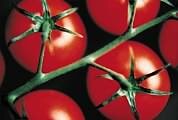
Tomatoes
Tomatoes

There are few vegetables that better mark the summer months than the sweet juiciness of a vine-ripened tomato. Although tomatoes are now available year-round, the truly wonderful qualities of tomatoes are the best when they are in season from July through September.

Tomatoes have fleshy internal segments filled with slippery seeds surrounded by a watery matrix. They can be red, yellow, orange, green, purple, or brown in color. Although tomatoes are fruits in a botanical sense, they don't have the dessert quality sweetness of other fruits. Instead they have a subtle sweetness that is complemented by a slightly bitter and acidic taste. Cooking tempers the acid and bitter qualities in tomatoes and brings out their warm, rich, sweetness.

Food Chart
This chart graphically details the %DV that a serving of Tomatoes provides for each of the nutrients of which it is a good, very good, or excellent source according to our Food Rating System. Additional information about the amount of these nutrients provided by Tomatoes can be found in the Food Rating System Chart. A link that takes you to the In-Depth Nutritional Profile for Tomatoes, featuring information over 80 nutrients, can be found under the Food Rating System Chart.

For more information about Tomatoes, go to From World's Healthiest Foods


Sunday, August 29, 2010

Sunday's Plate


When I hear the expression: "Eating healthy,"the first thing that enters my mind is eating healthy what? Healthy is an adjective. It's not an adverb, and it should modify eating and doesn't when one says, "eating healthy." It should be healthily.

As we get the grammar wrongly, we also get the eating wrongly. People unflinchingly say, "I had a great healthy meal at" - and then name a restaurant. This is an oxymoron. Some people think an oxymoron is a self contradictory effect; I think it's a pair of Dummy Tumpkins. One might say, "I had a delicious meal, a splendid meal, a really sumptuous meal..." not the same as a healthy or a "good" meal.

Let's think! Restaurant eating is not a healthy experience. The salt and fat and methods of cooking restaurant food puts it out of the healthy range. Most people eat out at least once a week. That's fine. But when eating out is a daily gig, and worse, a daily gig for children, the problem of high fat and high salt is tantamount to using a tanning bed on your insides every single day.

Yes, Miss Judy loves eating lunch out. Yes, I grew up in restaurants. Yes, I buy liquor store pizza for my grandboys. Yes, I love MacDonald's when I'm traveling. But I also know that this is a treat for the special occasion, and although I celebrate life every day, I'm not going to celebrate at the cost of my skin, my kidneys, my heart or my liver.

So what is the healthiest kind of eating? The healthiest foods are foods which have the least "treatment." The more you process a food, the more it loses its meaning; its reason to be; its ability to nourish and do its job.

The best food is fresh. Fruits and vegetables that are still in their skins are your healthiest food deal. Fresh meat and fish is also healthier than processed. You can't eat raw meat, but cooking foods gently helps. Grains that are whole are better than grains with the good part missing. Whole oats are better than cereal that has been pulverized with sugar and other additives with names so long, the food becomes a non food.

So how do you know what to buy?

Let's look at one of each food.

Let's start with pineapple. Canned pineapple is a convenience. It has a shelf life of about four thousand years. On the other hand, fresh pineapple has a shelf life of about three weeks. When you consider the taste, the fresh pineapple is incredibly delicious, and the canned tastes like can, is ultra sugary, and has the consistency of scrap plastic. Nutrition wise? The fresh pineapple is superior because the processing of the canned variety is loaded with extra sugar. The only processing that will cause the fresh pineapple to be nutritionally challenged is the cutting.

Let's look at corn. Fresh corn is wonderful and actually available all year long. Fresh corn needs one thing - shucking. You steam corn for less than five minutes in a frying pan. Or you can bake it in the oven for about thirty minutes. Canned corn, however, is soaked in sugared, salted water for years. Its poor quality reminds me of floating nodules of soap. When you buy corn in a can, you are paying for canned water with nodules. The nutrition is in the water, so drink the salted, sugared water if you want to retain your nutrients. Frozen is somewhere in between.

Let's look at grain products like cereal, bread, rice, and pasta. When your grain products are made with white flour exclusively, you are using the most processed food available. By moving your shopping list from white to whole grain, you are re-claiming the ingredients best for you. By buying whole grain cereals, you are opting for the least processed. When you buy whole grain pastry flour, you are achieving healthy baking (healthy modifies baking which is a noun.) When you buy whole grain pasta and rice, you are buying a product which has less "treatment" than white pastas and white rice. White pasta and rice need another food to push it through your intestines. If you don't eat the other food like fresh vegetables and fruits, that white rice or pasta just sits there and festers.

With meat, the idea is to keep away from frozen or canned entrees that have been prepared by someone else. Canned meat is a peril to the body and contains little or no nutritional value. Canned spaghetti, ravioli, potted meat might as well be a ticket to an internal tanning bed.

When any package has a long list of ingredients too 'lettery" to read, run for your life. Your food should come without a list of chemicals, additives and preservatives. If your food needs preservatives, you need to ask, "What is it waiting for?"

Buy fresh, buy often, and buy with care.

Friday's Tattler


We had a nice day on Friday. We started the day off with a great pancake breakfast, juice and milk.

Then we awarded the children who had not lost their medals with a gold bead. We will do this every week.

Then we had the Whole School Bee, and Michael, Phoenix and Garrett won. They each got a star for their medal.

Next we went to Ellis Park and visited the horses at Mr. Hancock's barn. He let everyone sit on the pony, and then a giant race horse. We got pictures of everyone, and they will be given out shortly.

We got to feed the horses peppermints, apples, carrots, and soda pop. It was really funny to watch.

Then we moseyed over to the grandstands and got to eat our lunch right next to the track.

The horses ran about 12:50 and we got to watch as they pounded by. It was exciting, and all the children cheered.

We got our picture in the paper at the race track.

Then we headed home for an afternoon of play.

All in all a great day!

Thursday, August 26, 2010

Thursday's Thought

Here is something to look at and think about for a lovely Thursday evening. Click!


Wednesday, August 25, 2010

Wonderful Wednesday

Dog Pack Attacks Gator In Florida

At times nature can be cruel, but there is also a raw beauty, and even a certain justice manifested within that cruelty.

The alligator,
one of the oldest and ultimate predators, normally considered the "apex predator", can still fall victim to implemented 'team work' strategy, made possible due to the tight knit social structure and "survival of the pack mentality" bred into the canines.

See the remarkable photograph below courtesy of Nature Magazine.


Note that the Alpha dog has a muzzle hold on the gator preventing it from
breathing, while another dog has a hold on the tail to keep it from thrashing. The third dog attacks the soft underbelly of the gator.


Not for the squeamish


Laughter is good for the soul. Have a Great Day!

Later Gator!!!!!!! :-)