Saturday, September 24, 2005

Jacksonville FL


Child Care Center Helps Hurricane Victims

By Mark Spain
First Coast News
JACKSONVILLE, FL

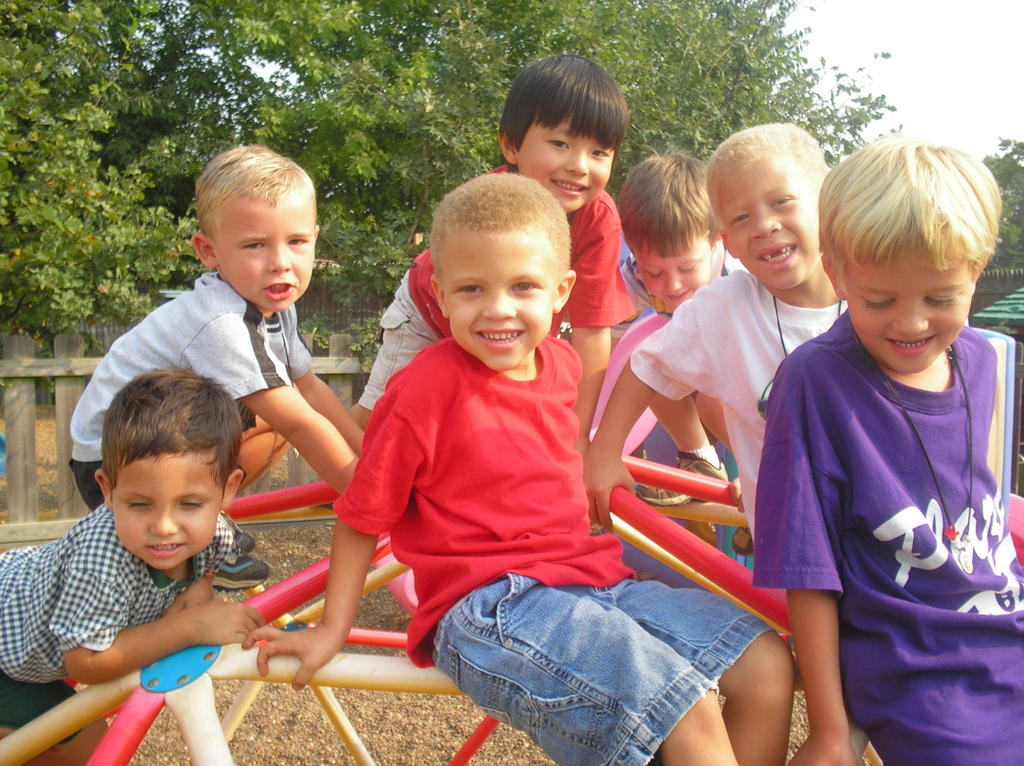
When Hurricane Katrina's victims began arriving on the First Coast, child care centers rolled out their welcome mats. Teeter Tikes Christian Learning College is one of them. Owner Pamela Davis opened the doors and will not shut them until there is no longer space or a need.

The care is being offered for free. "I'm a parent first. I have a daughter. I would wonder what would I do if it were me," said Davis. If it's only for an hour or an entire day, nobody will be turned away." It's just an awful thing that happened. They've already been through enough and to add extra charges and things would be outrageous," remarked Davis.

Friday, September 23, 2005

Dr. Spock


Reflections on a Classic: Dr. Spock's Baby and Child Care, 8th Edition
By Christopher J. Stephens

Sep 12, 2005

There were three types of books in my house when I was a child in the late sixties and through the seventies: classics, coffee-table art collections, and child care guides. The classics contained [but were by no means limited to] a small hardcover collection of the complete Shakespeare and handsome mock leather bound editions of ANNA KARENINA and THE GRAPES OF WRATH. The art collections featured removable prints of Renoir, Degas, and Monet. The child care guide was Dr. Spock's BABY AND CHILD CARE, the alpha and omega of reference books then, now, and probably forever.

Everything was sensation and immediate gratification when I was five in the summer of 1969. Books played a huge role in my world from the earliest of memories because they satisfied my need to know things. I remember my mother had a thoroughly dog-eared Pocket Books 1957 edition of Spock's classic. True to the name of its publisher, it was conveniently pocket sized and filled with sound, cogent advice to the new mother about everything from diapering, weaning from bottle to cup, and readiness for toilet training. I did not know at five that this book featured cogent advice.

All I knew was the kind-looking old man on the yellow cover, in black-rimmed glasses, stethoscope dangling from around his neck, connecting with a rosy-cheeked baby who didn't seem to mind being there. I knew nothing then of staged book cover photographs and other means by which a reader can be made to feel secure. All I knew was that my mother seemed to trust the man who wrote this book and it was always within arm's length in those early days.

Of course, the late sixties were a tumultuous time in which to raise a family. Rules were constantly being adapted and challenged. The 1957 edition of BABY AND CHILD CARE probably could not have predicted many of the issues that popped up in its 1968 edition. That my mother hadn't updated in eleven years probably says more about her needs than Spock's approach. She was a brand new mother in 1957. Spock's book was already twelve years old.

The issues that parents encountered raising children in an immediate post-WWII environment turned around by the late sixties, and what was perhaps seen in 1945 as effective and focused advice to young mothers was eventually interpreted as patronizing and demeaning. Anything sacrosanct for one generation is eventually and naturally going to be seen with suspicious eyes.

The practicality and comfort of Spock remains intact with the 2004 8th edition of this text, updated and revised by Dr. Robert Needlman "Trust yourself. You know more than you think you do." This was Spock's primary rule of parenting, and it is understandable that some fossilized experts might have seen that as a threat. How dare he empower the young parent? Is he trying to get them to draw on their natural nurturing instincts and tap their endless potential to simply love their own children? It must have been revolutionary fifty years ago when Spock promoted self-empowerment. History shows that childcare approaches and techniques before

Spock would be questionable now, if not possibly barbaric. What, then, was the key to his success? Simply put, there is a calm and focused nature to this narrative that cannot be beat. From the opening, Spock sets forth an agenda that remains as refreshing and comforting in 2005 as it must have been in 1945: Don't take too seriously all that the neighbors say. Don't be overawed by what the experts say. Take it easy, trust your instincts."

In a section that is as touching as it is re-assuring, he notes that we are all immigrants in one form or another. He adds that what might have been appropriate in one's home country can be construed as child abuse in this new one. He acknowledges that parents have needs as well and they should look at life in a wider perspective. Being totally absorbed in your baby is initially normal, but after about six months, things naturally fall back into place.

In the section "accepting the child you have," we feel echoes of issues that have haunted families for years. Johnny isn't the little boy I'd wanted. Mary has become a monster. The graceful and once again touching way he approaches these ideas remains timeless and priceless advice. It is almost as if Spock had forecasted by thirty years the pop psychology of the mid-seventies in which troubled adults were first compelled to embrace their own "inner child."

The book is arranged in chronological order. After all, putting aside all political implications, the life of a baby begins long before they are taken from the womb if only as an idea, a concept, a solid feeling. The pregnant woman knows she is changing and can feel different needs.

Early on we read sections called "Classic Spock" which comments on the natural wonder of watching a baby grow and the need for close physical connection with the infant. It can boggle the mind that American society at one time did not put priority on regular physical bonding with an infant, but it's true. The reader of this 8th edition should keep in mind how revolutionary [and for some incendiary] Spock's advice became.

Nothing good in life comes without a fight, and childcare is probably the greatest example of that saying. We are always wondering about our motives, or second-guessing our approach. Spock is there not to set things straight but rather to assure the young parent that their role is a work in progress. Go with the punches. If there's a serenity prayer that means something, memorize it.

In quick succession Spock effectively takes the reader through pre-schooler age [three to five], school age [six to eleven] and adolescence [twelve to eighteen.] In each section he maintains a calm, measured tone and keeps re-assuring the parent by helping them see their childholistically. Everything is everything. The tangible presence of your rugrat is riddled with implications that are connected with heart, mind, spirit food intake, peer pressure, environment, and life and life only. Take a deep breath, buckle up, and relax. You're in for a bumpy ride, but the end result is always going to be worthwhile.

Spock's approach seems most effective when dealing with toddlers. He is there with diet, physical development, diaper rashes, and a calm "laissez-faire" approach to toilet training. It can be understandable to see where he might have gotten criticized about advocating breast feeding and embracing all manner of family arrangements, but such understanding can only be made within the context of his time.

Mainstream society was scared of such practical and calm advice. He was rocking the boat, leveling the playing field between parent and child. No longer would Mom and Dad be the definitive experts as exemplified by June and Ward Cleaver from "Leave it to Beaver."Bob Dylan would say it well in 1963: "Come mothers and fathers throughout the land/Don't criticize what you can't understand/your sons and your daughters are beyond your command."

My favorite parts of this book are the "Classic Spock" sections. They speak most clearly to me perhaps because I can finally appreciate [at forty-one] how closely my parents took these sentiments to heart: Enjoy children as they are. One baby is born to be big-boned and square and chunky, while another will always be small-boned and delicate.They'll never be able to make full use of what brains, what skills, what physical attractiveness they have.

It would be difficult to find such graceful and true writing in many contemporary novels, let alone parenting books. I can imagine new parents wearing out yellow highlighters on such passages.

Punishment, Gender differences and homosexuality, manners and the facts of life are but a few of the hot-button topics Spock approaches here with the same calm, practical tone. There is no judgement or hidden moral agenda. Spock has not etched these chapters into stone and brought them down from the mountain to give to his people. Take from them what you will. Mix and match, combine elements, and throw everything into a huge, simmering ideological stew. One can only imagine the late Doctor Spock brimming with delight that the ideas here are still being discussed.

It's a complicated world in which BABY AND CHILD CARE has come kicking and screaming, but everything is adapted with the same measured approach. A great textbook, after all, lives and dies by its tone and theme. In this way, this new edition is able to effectively discuss the Internet, ADD/HD, Learning Disabilities, and saving for college.

No matter what get thrown at a good book, it can't tarnish the strength of its original premise. It's the classic elements here that remain strongest. Dr. Needlman and his other associates who worked on this 8th edition respect the essence of Spock's vision without simply making this a re-packaging of a sixty year old book with extra features. We need to know about safety and illnesses. We need to know immunization risks and the best way to buckle our children in when we go for a ride. Spock gives the new parent a great deal of credit and a wide highway in which to drive their car, but to his great credit he does not hesitate to set up definitive road blocks and traffic cones so as to guarantee the smoothest of rides.

Good books remain stuffed deep in the recesses of my mind. I can still picture all the books my parents had when I was a child, and all the tattered paperbacks I collected as a result. At times, they were a huge burden. I drew close to them when everything else seemed to let me down. I do not have any children of my own, but like many people my age I want them and I know from my life as an Uncle that I am a natural caregiver. DR. SPOCK'S BABY AND CHILD CARE 8th edition will join my library now, stuffed in the corners of the same bookshelf I remember when I was nine years old. An essential text is like a great bottle of wine. It only gets better with age.
Kuapa Kokoo - Ghana


Kuapa Kokoo Constructs Day Care Centre at Sankore

Sankore
Sept.14, 2005

The Management of Kuapa Kokoo, a licensed cocoa buying company on Tuesday inaugurated a 450 million cedi day care centre at Sankore in the Asunafo South district of the Brong Ahafo region.

The three classroom block project with a sleeping bay for the kids, staff room, head teacher's office, place of convenience was financed by the Kuapa Kokoo Farmers Trust, a subsidiary of the company which provides social amenities to people within its area of operations.

The centre was named after Nana Osei Yaw Akoto, one of the founders of Kuapa Kokoo in the Sankore area in appreciation of his immense contribution to the formation of more farmers' societies and the growth of the company in the area.

Nana Kwadwo Appiah-Kubi Chairman of the Kuapa Kokoo Farmers Union, said greater percentage of the company's profit each year was channelled into the provision of social amenities such as boreholes, schools, KVIPs to benefit farmers within its areas of operation.

He commended farmers in the Sankore area for their immense contribution to the growth of the company, adding" the centre is in recognition of your efforts.

"Nana Appiah-Kubi said the company had introduced fermentation boxes on experimental basis within its areas of operation to check the purple beans menace, which had affected operations of most licensed buying companies.

He said the Kuapa Kokoo Credit Union had disbursed about 25 billion cedis as loans within the last two years to its members to expand their farms and support the educational needs of their children and therefore, urged other farmers to join the credit union to benefit from the loan scheme.

Mr Lawrence Ackah Santanah, Chairman of the Kuapa Kokoo Farmers Trust, said the day care centre was the fifth of such facilities provided by the trust in five regions where the company was operating in recognition of the farmers' contribution to the growth of the company.

He said Sankore, where the company started in the Brong Ahafo region, had the largest number of societies and was optimistic the farmers would take good care of the centre and other facilities, provided by the company for the benefit of the people.

Mr Eric Opoku, Member of Parliament for the area, said education was the bedrock of every society and commended the company for the gesture.

He appealed to the farmers to take advantage of the facility and send their children to school to enable them acquire education that would sustain their future.

Nana Tabiri Gyansah, Krontihene of Sankore, thanked the company for the gesture and appealed for the extension of electricity and water to the centre.

Parents Are The First Teachers

This could not have been better said. It is a remarkable piece and this woman is to be congratulated for her insight.


Battle Creek Enquirer

September 11

Parents Are First Teachers
Ruth Kavalhuna

Parents are their children's first and most important teachers. No one can match the devotion that families give to the well-being, healthy development and educational success of their children. Multiple studies have shown that children are more likely to reach their full potential when their parents take an active role in their education. Throughout a child's growing-up years, adults play a decisive role in all aspects of their development and no period is more important than the first years.

SCIENCE AND BRAIN DEVELOPMENT

Neuroscience has discovered that an incredible amount of learning is taking place in the brains of children during the first three years of life. A newborn's brain is filled with neurons in such great abundance that it's as if it is ready and waiting to learn anything and everything. Learning takes place when these brain cells become connected to each other creating "learning pathways" upon which all future learning will take place. It is while the infant receives stimulation from the world around him that this connecting or "wiring" process takes place. A parent's job is to provide an environment that is rich in positive stimulation that will build strong learning pathways.

CRITICAL EXPERIENCES

Children who hear warm, friendly voices talking, singing, explaining and comforting during their first three years will build strong learning pathways for communication and language. This is important because most experts agree that early language development is essential to becoming a successful reader. Young children who are read to every day develop an interest in books and a love of reading that will help them become competent readers and writers in early elementary school. Babies and toddlers who are encouraged to explore the world around them by touching, climbing, seeing and doing are building the foundations for problem-solving. Children who do not have these experiences fail to develop strong learning pathways and are likely to have learning difficulties in school. The most effective way to develop a child's capacity for educational success is by assuring that she is surrounded by interesting experiences and loving people throughout her first three years.

KEY QUESTIONS FOR COMMUNITY

Every parent needs partners in the important process of raising a young child. Grandparents, child-care providers, baby-sitters, neighbors, extended family members, school systems and the community-at-large all play a role in influencing the early educational process. Our community, as well as every individual citizen, benefits when we each accept the responsibility to become involved in supporting early childhood growth and development. We need to ask ourselves some challenging questions:

· Do all parents have access to services that will educate and support their role as their child's first and most important teacher?

· Do families and health-care, child-care and education systems act as partners on behalf of the early development of our young children?

· Do all young children in our community have access to high quality early childhood books and someone to read to them every day?

· Does our community have the political will to support quality early childhood educational programs and child-care services?

When we can say "yes" to these critical questions, we will see all children entering school ready to become competent readers and communicators by the end of third grade.
Ruth Kavalhuna is director of early childhood programs for the Calhoun Intermediate School District. She may be contacted via e-mail at
Kavalhur@calhoounisd.org.

Kathmandu and Japan


The Rising Nepal

Japanese Scholars to Support Early Childhood education

By Our Correspondent Kathmandu

A Japanese University is now trying to add a new chapter in the history of cooperation between Nepal and Japan by supporting Nepal in introducing early childhood education.

Fukui Seiji, Professor of Faculty of Humanities, Seiwa College Japan, is now in the capital to observe the condition of early childhood education system of Nepal.

Prof. Seiji is leading a seven-member delegation of his college under the exchange visit programme coordinated by international cultural centre with AIMS Academy, Lalitpur.

Seiwa College has 125 years history in the field of early childhood education. Their team visited the orphanage and transit home of CWIN, Mithila Art Centre Janakpur, traditional metal, brick, carpet weaving and textile factories of Kathmandu to observe the working environment, interview the workers and the employers, estimate and observe the education status of the workers,” said professor Seiji.

Under the exchange visit, students of both college work on the same project, producing reports on ,” Condition of Workers in the factories of Nepal and status of education of their children”.

Students studying at the graduate level are happy with this kind of exchange visit programme.

“Now, we have better ideas about how things are moving in the third world countries,” one of the participants said.

The exchange programme was initiated a few years back. Students and teachers from AIMS academy had visited Seiwa College. They were so much impressed from the education system of Japan that they have decided to introduce new techniques in nursery education. Another beauty of this exchange visit is that all the delegates were given the opportunity to experience first hand Japanese life through home stays in different Japanese families.

Thursday, September 22, 2005

Adjusting to a New School


BRADLEY HOSPITAL
A Lifespan Partner
Carol Lin Vieira
Senior Marketing and Communications Officer
Bradley Hospital

Helping children adjust to a new school Providence, RI

For many kids, starting a new school can be an exciting, yet challenging experience. Parents can do a lot to help ease their child's transition, says Alison Miller, Ph.D., a developmental psychologist atBradley Hospital, the nation's first psychiatric hospital for children.

"When a child knows that his or her parents are taking the time to familiarize themselves with their new school, it can go a long way in boosting their self-confidence as the new kid," says Miller.

She recommends that parents make an appointment to meet with the teacher before their child starts classes. Miller also suggests that parents call the school and find out if there is an orientation for new students and if not, to arrange a tour for their child before classes begin.

Parents can also do a practice run for getting to and from school and should ask their children about their concerns and offer solutions. Forexample, if a child is worried that she won't be able to open her locker, have her practice before school starts. "Addressing your child's fears of the unknown," says Miller, "Should help ease his or her concerns."

Other parents in the neighborhood can also be an invaluable resource since they are familiar with the school environment and after-school activities. Befriending other parents also affords a new kid the opportunity to meet aclassmate before school starts, and knowing someone beforehand can help alleviate a child's anxiety.

Miller emphasizes that having a close and well-informed connection between home and school is very important for a child's adjustment and school success. "Volunteer in the classroom or on class trips if possible, and ask the teacher if there are any classroom rituals, or if you could provide any special supplies that would make your child feel prepared and more included," she suggests.

Parents can also review social skills with their children by coaching them on how to introduce themselves, how to ask questions to get to know others, and to remember to share with classmates and smile.

Miller recommends that parents solicit their child's opinions about the newschool and continue asking questions about the new routine. "Your child should feel that they have a forum in which to discuss their positive and negative feelings about the new school - keeping yourself informed is important for many reasons, but most crucially, to ensure that adjustment is progressing normally," says Miller.

Since it may take a few weeks or months for kids to feel comfortable in a new school, it is important that parents do not dismiss their child's concerns. "If you notice that your child is complaining excessively about illness on school days, actively avoiding any discussion of school, having trouble sleeping, or wetting the bed, you may wish to schedule an appointment with your child's teacher and/or school counselor to discuss your child's adjustment," says Miller.

Additionally, a hearing and vision test should be performed to rule out physical problems.

Child Care Teachers - More Bad News

Here's a series of reports from every corner of the country about a problem that can't seem to be solved.

Report: Child Care Teachers Lack Training and Education
By Dana Hull
Mercury News, California

A national report jointly published by three research institutes has found that early childhood educators -- the people who take care of our nation's youngest children -- often earn less than $10 an hour, lack college degrees, and have no specialized training in childhood development.

The ``Losing Ground in Early Childhood Education'' report largely focuses on ``center-based'' child care, as opposed to individuals who care for children in their own homes. It includes for-profit and not-for-profit child care centers, Head Start programs, and stand-alone preschools and nursery schools.

Among the findings for California:

• The median hourly wage for teachers and directors is $11.33.

• Only 25 percent of center-based teachers and administrators have a college degree.

``There is more and more research that shows the benefits of investment in quality preschools,'' said Stephen Herzenberg, executive director of the Keystone Research Center and one of the report's authors. ``We hope our report drives home that we're not making enough public investment now.''

The report's release comes as supporters of California's Preschool for All initiative gather signatures to qualify the measure for the June 2006 ballot. Spearheaded by Rob Reiner, the initiative would fund voluntary preschool for all California children in the year before kindergarten by taxing state residents who earn more than $400,000 a year.

The initiative would require preschool teachers, over time, to earn credentials comparable to those in the K-12 system, and to be similarly compensated. It would provide financial aid so that preschoolteachers could get bachelor's degrees and additional training in early childhood development.

New Jersey


Morris Child-care Centers Rely on Benefits to Lure Quality Recruits
BY LAURA BRUNO DAILY RECORD
Morris County, New Jersey

The state's youngest students are being taught by teachers who are less educated today than they were in the 1980s, according to study released by a Washington, D.C.-based nonprofit economic research center.

While New Jersey is considered at the forefront in the U.S. in efforts to improve preschool programs in low-income communities, the Economic Policy Institute found that persistently low wages and benefits have resulted in a smaller percentage of college graduates today working as early childhood teachers and administrators than 20 years ago.

The share of New Jersey childcare center teachers and administrators with a four-year college degree slipped from 54 percent in 1980 to 45 percent in 2000, according to the institute's study of Census data. New Jersey's figures, however, are still well above the national level of 30 percent with a college degree.

"Overall, the picture in New Jersey is strong, because as the situation in New Jersey has gotten worse, the same thing has happened throughout the United States," said Stephen Herzenberg, one of the report's authors, and the executive director of the Pennsylvania-based Keystone Research Center.

New Jersey has been on the right track in the Abbott communities, the state's poorest school districts, Herzenberg said. The state required that, by September 2004, all Abbott preschool teachers have a bachelor's degree. The progress from this policy is not yet reflected in available data, he said.

Meanwhile, the Abbott programs only serve about one-quarter of the state's 3- and 4-year-olds.

"New Jersey's work is not done yet," Herzenberg said. "It's off to a good start."

The picture in the rest of the country is far more bleak. Only two states -- Pennsylvania and Hawaii -- had higher percentages of college graduates in their early childhood workforce -- 53 percent and 46 percent respectively.

The percentage of U.S. center-based teachers and administrators with at least a four-year college degree averaged 43 percent from 1983 to 1985, but only 30 percent from 2002 to 2004.
"It's a battle because the ones who come with the degrees come for the experience and then leave for the public schools because of the higher pay," said Eileen Jankunis, executive director of Morris County's Head Start.

Of the 11 teachers Jankunis employs, only four have been with Head Start for 10 years. And of the 11, six have a bachelor's degree.

"The hardest thing is recruiting a new teacher," Jankunis said. "When they hear the salary, I lose a lot of them right there."

Jankunis pays a starting salary of $16.67 an hour, or about $28,700 a year for a new teacher with a bachelor's degree. Many Morris County school districts pay starting teachers an annual salary closer to $40,000.

In New Jersey, the median hourly earning for a childcare worker is $11.50, according to the institute's study.

The early childhood education industry has been living off college-educated teachers and directors who entered the field in the 1960s and 1970s and stayed with it. However, as the demand for childcare exploded, the industry could not attract similarly educated workers with the low wages and lack of benefits, Herzenberg said.

Steven Barnett, director of the National Institute for Early Education Research at Rutgers University, said the data show the effect of the national welfare-to-work policies.

Barnett said the federal government was more interested in getting people into work and didn't worry about the development of their children. The federal government has only subsidized custodial care of these children, rather than investing in people who could teach, Barnett said.

"They poured a lot of money in childcare without concern about quality," Barnett said.

While there has been marked improvement in New Jersey's Abbott districts, Barnett agreed that, outside those communities, more progress is needed. The state's current requirements call only for a center's head teacher to have a bachelor's degree and assistant teachers to have a high school diploma.

Some Morris County childcare centers try to keep highly qualified teachers by offering extra benefits to offset the lower pay.

At Kiddie Academy in Morristown, teachers are offered an 80 percent discount of their child's tuition, said Jill Head, the center's director. That's attractive to a parent looking for a flexible work schedule, she said, considering that tuition costs $258 a week for a toddler.

Kiddie Academy also offers medical and dental benefits, tuition reimbursement for teachers who pursue higher education and on-site training. Of her center's 26 staff members, eight have a bachelor's degree, she said.

"We try to make it so that they can build a career here,"Head said. "It is a struggle though because the pay is not always there."

Likewise, at Children on the Green in Morristown, the center offers free health and dental benefits and a company match for a retirement plan. Rochelle Kelman, the nonprofit center's executive director, said these benefits have helped to retain good teachers.

Of her four teachers, two have a bachelor's degree, she said.

Kelman said many centers find that with a good number of public school teachers retiring, those with degrees don't have a hard time getting jobs in the public schools.

In order to get quality early childhood programs to flourish, there must be a greater investment in salaries and benefits.

"Quality early childhood education is an infrastructure investment for a knowledge-based economy," Herzenberg said. "We're shooting ourselves in the foot if we're not making that investment."

New Mexico


New Mexico Business Weekly
Study Shows Early Childhood Education Quality Falling

New Mexico ranks near the bottom of a recent study by the Economic Policy Institute (EPI) that shows that for the last 20 years the qualifications of the early childhood education (ECE) workforce nationwide has continued to fall so that now 30 percent of teachers and administrators have only a high school diploma or less.

The study attributes the trend to low wages and low teacher morale. It concludes that more ECE teachers are leaving child care centers for jobs in K-12 educational institutions and the effectiveness of early childhood education is losing ground.

At the start of this year, New Mexico Governor Bill Richardson set aside $5 million for pre-kindergarten education, saying the funds were an important step toward helping youth get an early start to educational success.

New Mexico didn't fare well across the board in the category of wages. Teachers in the Land of Enchantment have the fourth lowest average hourly wage of the 43 states where data was available, with an average hourly pay rate of $7.48. The highest average wage reported was $12.40 per hour. This state ranked first for ECE teachers and administrators living 200 percent below the federal poverty level. The study said 44 percent of this state's early childhood education educators and administrators fell into that category.

Regarding teacher qualification standards in New Mexico, only 23 percent of teachers and administrators in this state have a college degree, the fifth lowest percentage of the 43 states studied.

The EPI study was conducted using responses from teachers and administrators in ECE programs that was collected over a 22-year period.

For more information on the study or to see the report, visit www.epi.org/content.cfm/ece.

New Jersey


Child Care Workers' Education Declines in New Jersey
Thursday, September 15, 2005
By PEGGY O'CROWLEY
Star-Ledger Staff

The number of college-educated child care workers has dropped steadily over 20 years as the number of children in day care has exploded, raising questions about the overall quality of supervision, according to a national study released today.

While the national picture looks bleak, New Jersey's day care staff is among the most qualified in the nation, according to Stephen Herzenberg, an economist and researcher for the study, "Losing Ground in Early Childhood Education: Declining Workforce Qualifications in an Expanding Industry."

"New Jersey has always been historically higher," he said. While the national average of teachers and administrators with a four-year degree is 30 percent, the rate at state child care centers is 45 percent, the study said. However, that figure is down from 1980, when the state rate was 54 percent.

The study, the first to document changes in the education of child care staff, looked at teachers and administrators at centers from 1979 to 2004. From the early '80s until now, those with a college education dropped from 43 to 30 percent, nationally. At the same time, the industry exploded -- more than doubling its work force to 400,000.

The finding is significant because of mounting evidence that high-quality early childhood education -- including well-trained staff and low staff turnover -- helps children do better in school, as well as later in life.

"I think what this study does is validate what folks in the field know has happened for quite a few years. They've now got the goods when it comes to making the case that these qualifications are far too low," Herzenberg said. "It's penny- wise and pound foolish."

Ironically, the decline in college- educated staff is directly linked to the increase of young children in day care. As more opportunities for higher-paying jobs opened up to women, female college graduates shunned traditionally female careers, such as early childhood care.

In 2004, the average hourly pay for a college-educated teacher or administrator in a child care center was $10, compared to $19.23 for all female college graduates, the study said. A bit more than one-quarter received health care benefits, compared to two-thirds of all American workers.

"We're seeing a brain drain out of the early child care system," said Marci Young, deputy director of the Center for the Child Care Work Force, an advocacy group linked with the American Federation of Teachers.

One child care dropout is Maritza Oyola of Newark, who graduated from Montclair State University in May with a bachelor's degree. Oyola, who has 10 years' experience in child care, in centers and as a nanny, applied for a job as a classroom teacher in a for-profit child care chain.
But she changed her mind when she found out the starting pay was $10 to $12 an hour, right around the $11.50 that is the average pay for the job in New Jersey. Instead, she took a position working with mentally disabled adults that pays nearly $16 an hour, with full benefits.

"The (child care) pay was not equal to my years of experience and my educational background," said Oyola, 31.

Nonetheless, New Jersey is considered a leader in state-supported, high-quality child care because of its commitment to the so-called Abbott districts, the poorest in the state. Under court mandate, teachers of 3- and 4-year-olds must have a degree and be certified to teach pre-kindergarten through grade 3. They also must be paid the same rate and get benefits similar to those of public school teachers.

Also, changes approved this year by the state licensing bureau stipulate directors of centers with more than 30 children have a bachelor's degree or receive additional training.

"I'm ecstatic about what we've accomplished so far," said Ellen Frede, a professor of early childhood education at the College of New Jersey and an architect of the Abbott program.

"Unfortunately, that's not the case with lots of the programs in general. It's absolutely alarming when you take into consideration the research over the last decade or so that shows how important it is for children to have a high-quality learning environment."

The study, sponsored by the Economic Policy Institute, a Washington, D.C., economic think tank, was conducted by researchers at the Keystone Research Center in Harrisburg, Pa.
Peggy O'Crowley covers family is sues. She may be reached at pocrow ley@starledger.com or at (973) 392-5810.

Wednesday, September 21, 2005

In Cape Cod


Early Childhood Check-in from the Cape Codder MA

Friday, September 16, 2005

(Please send items for this column to Elizabeth Aldred at Cape Cod Children's Place, P.O. Box 1935, N. Eastham, MA 02651; tel. 508-240-3310 or 800-871-9535; fax 508-240-2352.)

Here’s what’s happening in Cape Cod:

Eastham Playgroup Hosts Sing-along

The Eastham Toddler Time playgroup meets at the Eastham United Methodist Church, Route 6, on Tuesdays from 10 to 11:30 a.m.

On Sept. 20, singer-songwriter Julie Wanamaker will visit the group. She will play new songs and old favorites; bring your infants and children up to age 3 and sing along. For information on this playgroup, call parent coordinator Laura Handbville at 508-255-7452.

For information on other Lower and Outer Cape playgroups and activities for children of the same age group, funded by the Mass. Family Network program, call Cape Cod Children's Place at 508-240-3310.

Call the Children's Place at 508-240-3310 for information about the council, or just come to Wednesday's meeting.

Adoption LifeBooks Program

Adoptive parents and families considering adoption are invited to attend the first in a series of programs in an education and support series sponsored this fall and winter by the Cape Cod Adoption Network.

Author Cindy Probst will speak on "Adoption LifeBooks: A Bridge to your Child's Beginnings" on Saturday, Sept. 24, from 2 to 4:30 p.m. at the Harwich Community Center on Oak Street.

This is a collaborative program supported by funding from the Mass. Children's Trust Fund and the Mass. Department of Early Education and Care. For information, and to register for childcare, call one of the collaborating partners:

  • Cape Cod Children's Place 508-240-3310
  • Cape Cod Child Development 508-775-6240 ext. 512
  • Harwich Family Resource Center 508-430-1692
  • Upper Cape Family Network 508-548-0151 ext. 172

Free Parent CPR Class

Registration is being accepted now for a free, three-hour introduction to CPR and first aid presented for parents and parents-to-be. The class will be held Thursday, Oct. 13, from 6 to 9 p.m. at Cape Cod Children's Place, Forest Avenue in North Eastham. Call 508-240-3310 to sign up. No childcare is available. This class is one of many programs for Lower and Outer Cape families funded by a grant from Mass. Early Education and Care, administered by the Children's Place.

Provincetown Playgroup Moves to Library

The Provincetown Born to Read playgroup opens in its new home at the Provincetown Public Library, 356 Commercial St., on Sept. 20. The playgroup will meet Tuesdays and Thursdays from 9 to 11:30 a.m.

All children up to age 3 accompanied by a parent or caregiver are invited to attend this free playgroup and enjoy stories, music, play and snacks led by Linda Schlechter, playgroup facilitator. For information, call Karen at the library, 508-487-7094.

Early Childhood Council Meets

Calling all parents and others interested in early childhood programs and activities on the Lower and Outer Cape: Come to the first meeting this school year of the Lower Cape Early Childhood Council on Wednesday, Sept. 21, from 6:30 to 8 p.m. at Cape Cod Children's Place, Forest Avenue in North Eastham.

This group meets the third Wednesday of each month to discuss programs for children and families, and to oversee the grants that fund the programs. The council's goal this year will be to stay updated on important changes to funding and programs as the state reorganizes its services under the new department of Early Education and Care.


Moms & Babies Groups Meet Weekly

Two Moms & Babies groups meet every week, for mothers and their pre-walking babies. One group meets Mondays at the Harwich Community Center on Oak Street, the other meets at Cape Cod Children's Place on Forest Avenue in North Eastham. Both groups meet from 10:30 a.m. to noon.

These free groups are funded by the Children's Trust Fund and facilitated by Kim Concra, parent education coordinator at the Children's Place. Call 508-240-3310 for more information.

Wellfleet Positions Available

Two positions are available for people interested in working with children's programs in Wellfleet.

Wellfleet Public Library is looking for a person or persons - parent, teenager, community member - to help out on Fridays from 10 to 11:30 a.m. and from 3:30 to 5 p.m. with jobs supporting the early childhood programs offered at the library. A stipend will be paid for this job, which will involve some heavy lifting and book shelving. Call Martha Gordon or Lucy Gilmore at the library, 508-349-0310. [continue]

Wellfleet Child Care Association is looking for a director for the program, which provides afterschool activities and care for children at Wellfleet Elementary School. Call Margaret Ward at 508-349-7932 for information.

Reminder

Wellfleet Council on Aging will host a shower and open house tomorrow, Sept. 17, from 9 to 11 a.m. for a new childcare program to be located at the COA. The program, Children's Place Sea-Babies at the Wellfleet COA, will provide licensed care for infants and toddlers. It will be operated and administered by Cape Cod Children's Place. For more information, call 508-240-3310, or Terry at the COA 508-349-2800 ext. 205.


Book Report - The Mom Factor


Dottie DeHart Rocks
DeHart Public Relations

The Mom Factor is groundbreaking new book from Urban Land Institute explains how Moms decide where to spend their time and money in restaurants, stores, theme parks, and other family attractions.

Washington, DC (May 2005)--Listen to your mother. It's good advice for practically everyone. But if you own or manage a store, restaurant, amusement park, sports arena, museum, or any other location where families go to spend money, this friendly little admonishment takes on a whole new meaning. Simply put, mothers control America's purse strings.

And that truth, according to a compelling new book from the Urban Land Institute, is reason enough to get them firmly in your corner.

It is estimated that women engage in 80 to 88 percent of all consumer spending in the U.S.," says Nora Lee, author of The Mom Factor: What Really Drives Where We Shop, Eat, and Play. Now, consider that three-fourths of America's 108 million adult women are mothers. It doesn't take a mathematician to see that Moms make well over half the consumer buying decisions in this country! That is staggering financial power . . . so why don't businesses bend over backwards to attract us?"

It's a good question, and one that is thoroughly explored in Lee's book.

The Mom Factor is rich in real-life observations and anecdotal evidence of what happens when companies ignore Mom and what happens when they acknowledge her. And Lee has helpfully concentrated her findings into what she calls "The Mom Factor Checklist," eleven elements that make a store, restaurant, or other family venue appealing to mothers. Here, condensed from the book, is her list:
1. Health and Safety
2. Customer Service
3. Value
4. Efficiency
5. Social and Community Conscience
6. Story
7. Comfort
8. Learning and Teaching Opportunities
9. Fun
10. Continuity and Change
11. Connection to the Heart

"You know the old adage, 'If mama ain't happy, ain't nobody happy'."

Cannelton Indiana


Here's something local.

The Perry County News Online edition

Couple's day-care plans find home in Cannelton
By KEVIN KOELLINGManaging Editor

CANNELTON - A couple who tried unsuccessfully to expand a child-care facility in Tell City have turned to Cannelton, where they found open arms and, perhaps, an open wallet.

Heather and Eric Daum's attempts to get a conditional-use permit that would have allowed her to care for up to 12 children at her 147 11th St. facility in Tell City were thwarted by neighbors who objected to traffic and other problems it might bring. Child care is an acceptable use of residential property under city rules, but requires prospective providers to obtain permission from city leaders.

A late-August meeting of the Tell City Advisory Plan Commission ended with members deadlocked on whether to allow the "conditional use" of the property - sending the issue to a Sept. 7 meeting, in which the commission forwarded the request to the city's board of zoning appeals with a neutral recommendation.

The board of zoning appeals is scheduled to meet Oct. 4 to consider the request unless the Daums withdraw their plans."We're closing the one in Tell City because they ran us out," Eric Daum told Cannelton's council members.The new facility will be in what is now the M & M Discount Grocery at 501 Taylor St.

"Everything is OK as far as zoning," Heather Daum said, although a number of renovations will be necessary to prepare the building. Her husband explained Indiana licenses child-care facilities for up to 12 children. To accommodate as many as 24 children up to 12 years old as the couple plans, their renovations will put two child-care centers in the same building, each managed by a licensed provider.

Now consisting of a large room in the front of the building and an apartment in the back, the building will feature separate play areas for younger and older children. A garage door will be sealed and two fire escapes added. Landscaping will include mulching with a child-safe material, and "we'll add a lot of outdoor play equipment," Heather Daum said.

"When we started trying to find child care, we saw there's a need for quality child care," she told council members. While several individuals may offer day care, "there are no licensed child cares in Cannelton," she added.

To get her new facility up and running, she requested an economic-development loan of "$15,000 or whatever you could offer me." On city attorney Bill Shaneyfelt's recommendation, the council authorized him and Clerk-Treasurer Mary Snyder to work out the details and bring the proposal back to a future council meeting for final action.

"People are talking about us," Heather Daum said. Some women working at Accent Customer Relationship Services conducted an informal survey for her, she said, and found a strong need exists for a child-care center.

Tuesday, September 20, 2005

Canada A Voice for Children

I think this says it all. More and more there are studies done coast to coast that reveal how the job of early childhood is losing the educated because it is a job with low pay. Most people can't afford to teach very young children.

SHAWN MERRITHEW
The Daily Gleaner

To work in child care, you need to have patience, and, most importantly, you need to have a love for children.

Jillian Boyd is one of those loving caregivers. She is the owner/operator of Jilly Beans Childcare on Hanwell Road and a child-care worker.

"You just have to love children to do it. If you're in for the money, it's not there."

It was her love of children that lead to her career choice. Boyd said she always has enjoyed working with children over the years and has worked on various summer programs in different parks in the past.Her interest in working with children led her to take the child-care program offered by the New Brunswick Community College system.

"I knew a week after I started the course, this was what I was definitely looking for."Boyd has been working as a child-care worker for more than seven years now. She began working out of the basement of her house in Southwood Park. After one year, she said her centre was full of children."I took a chance and built this building out here (at 37 Michael Ave.) and expanded because I knew there was a need for it."

She said there was only one day care located on the Hanwell Road and knew the area was quickly growing. So Boyd took the plunge to expand her day care, and it has paid off over the years. B ut there's more to being a child-care worker than just watching the children.

Although watching out and being responsible for the children in her care are the most important duties Boyd has to attend to, she also has toprepare meals for the children."Our menus have to follow the Canada Food Guide," she said.

Another is planning activities for the children. These activities are educational and help children develop the early skills necessary before going off to school, she said.

The main thing about the job that Boyd enjoys is working with the children. "The first five years of a child's life are the most important," she said. "So to be able to be a part of the children's life at that period is rewarding and wonderful. It's great just to see the children develop."

Another is that she is able to enrich the children's lives through the activities and environment and help prepare them for the next stage of their lives."You are able to provide different opportunities that they may never have had the chance to experience. And you see them grow and learn - you're making a difference." One downside is as you establish a relationship with the children, it becomes hard to see them leave."

But, however, we have new children that enrol and new relationships," she added. Money also is a downside. Since child care doesn't offer huge salaries, it's hard to find qualified staff."When you do find them, it's hard to keep them because it's not a very well-paying job."But a love for children and patience is not enough to become a child-care worker.

One will need to complete a one-year early child-care course offered through the community college system, said Diane Lutes, program consultant with the provincial Department of Family and Community Services.

Lutes said one must have first aid and infant CPR training and must be at least 19 years or older." You can work between the ages of 16 and 19, but you can not be directly responsible for the children." T he demand for child-care workers is increasing in the province, said Lutes."

There is more of a push, at both the national and provincial levels, towards this profession to have some level of qualification. Recruiting, in terms of getting trained staff, is just beginning to (in New Brunswick) become demanding."

Boyd said she has been fortunate to work in a field she enjoys so much."I guess these days that is a bonus to find something you really enjoy working at."At the end of the day, she said, she receives self-gratification by knowing she has been able to help make a difference in a child's life during his or hers early years.And as an owner, she feels happy about being able to provide employment to other early child educators "so they have the same opportunities to enrich children's lives."

New York


Here's another study that backs up the failure.


Study Faults Early Education
Rochester Democrat and Chronicle News

Cara Matthews
Albany Bureau

(September 15, 2005)

Low wages in an ever-expanding and increasingly expensive early-childhood education industry means that less-qualified workers are teaching young children, according to a new study by three nationally known research groups.

Research has documented that early education is important in kids' development and has valuable long-term benefits, said Stephen Herzenberg, executive director of the Keystone Research Center, which produced the report along with the Economic Policy Institute and the Foundation for Child Development.

Although the percentage of early-childhood teachers and administrators with college degrees has fallen in New York, it is still markedly higher than the national average.

In 1980, 60 percent of New Yorkers in these categories had graduated from four-year institutions, compared with 50 percent in 2000. The national average in 2000 was 30 percent, the report said.

The share of all of New York's educators — teachers, directors, assistant teachers and aides — with four-year degrees fell from 42 percent in 1980 to about 23 percent in the 2000-04 period.

Females comprise more than 95 percent of the more than 60,000-member early-childhood education work force in New York. The total is up from fewer than 20,000 in 1980. The median pay is less than $10 an hour, compared with $14.50 for all workers.

Kathy Russell, director of the Graduate Inclusive Early Childhood Program at Nazareth College, said many people love working in early-childhood education but move onto other things for economic reasons.

"Because of the relatively lower pay, oftentimes they find as they get older that they're really not able to make a career of it, not able to live on it," she said.

Pennsylvania

Sometimes a talent without a degree is the best solution to the problem. Degrees demand a salary that counts. The problem is finding someone whose interest in the world around them hasn't caused them to seek a degree. A degree is often the thing that wakes the sleepy minded up.

At the same time, degrees have a way of closing minds as well.

Share With Four-Year College Degree Drops From 40% to 27%
Pennsylvania Issue Brief Part of Nationwide Release of Research Conducted by Pennsylvania-based Think Tank

HARRISBURG, Pa., Sept. 15 /PRNewswire/ --

In the 1980s about 40 percent ofteaching staff in Pennsylvania's center-based preschool programs outside the public schools had a four-year college degree. Today, according to a new studyby the Keystone Research Center, the number is 27 percent.

The study, "Losing Ground in Pennsylvania Early Childhood Education," also reports that the share of staff with a high school degree or less has risen from 34% in the mid-1980s to 43% in the 1998-2004 period. (Teaching staff,also referred to as early childhood educators, include teachers,administrators, assistant teachers, and aides.)

The decline in the educational level of early childhood educators at atime when the overall workforce became more educated is cause for concern according to Stephen Herzenberg, executive director of the Keystone ResearchCenter and an author of the study.

"There is compelling evidence that high-quality early education has agreat positive benefit to young children later in school and life," says Herzenberg. "Because the quality of early education depends in large part on thequality of the teachers who provide it, the data we report today should serveas a warning about the overall health of early childhood education inPennsylvania."

According to the KRC study, one major reason for the decline is the lowwages of jobs in early childhood education. The median pay in the industry isabout $8 an hour, or about $17,000 a year, for a full-time worker. Few earlyeducation jobs provide health or pension benefits.

"What Pennsylvania needs," says Mark Price, KRC economist and report co-author, "is a comprehensive approach to assuring quality in early childhood education programs. That means phasing in higher standards for staff and raising compensation so that ECE can hold onto more qualified teachers.

The state should also encourage new research that will expand our understanding ofthe impact of teacher qualifications and alternative training approaches."

Price notes that Pennsylvania has taken positive steps with the existing TEACH program that provides scholarships for education and training of earlychildhood educators, and the Keystone STARS program that offers incentives tocenters to improve program quality. These programs, however, are not operated at the scale necessary to reverse the fall in staff qualifications documentedin "Losing Ground."

Among the KRC study's other main findings:

By the year 2000, less than a third of center-based early childhoodeducators had a college degree in seven of eight metropolitan areas. In Reading, Lancaster, Harrisburg, Allentown and York, less than a quarter ofcenter-based early childhood educators had a college degree.

Education levels are even lower in Pennsylvania's home-based ECE. In Pennsylvania home-based ECE, only 14 percent of educators have a college degree and half have a high school degree or less.

The report on the early childhood education workforce in Pennsylvania isone of seven state-level studies released today along with a longer nationalstudy. All of the reports were written by KRC staff and released by KRC, theWashington, D.C.-based Economic Policy Institute, and the Foundation for ChildDevelopment. The Foundation for Child Development provided funds for the national project.

The national and state reports fill a vacuum that had existed in knowledge of the ECE workforce over time. The national study and state-level studies for California, Florida,Massachusetts, New Jersey, New York, Pennsylvania and Wisconsin are available from the KRC-sponsored,
the EconomicPolicy Institute or the Foundation for ChildDevelopment

The Keystone Research Center's research on the Pennsylvania early childhood education workforce was funded by grants from the Heinz Endowmentsand the William Penn Foundation. The Keystone Research Center is a non-partisan progressive research organization based in Harrisburg, Pennsylvania and a leading source of independent analysis of Pennsylvania's economy and public policy. Most KRCreports are online at http://www.keystoneresearch.org/.

Stepfamilies


Here's some good advice for blended families and all families.

Karon Phillips Goodman

WHAT NOT TO DO on Stepfamily Day
Annual Observance Set for September 16

This past weekend, blended families throughout the country will join together at community picnics, barbeques, and other events. They have good reason to celebrate: while nearly two-thirds of all second (or later) marriages with children end in divorce, these families have beaten the odds and survived.

Stepfamily expert and author Karon Phillips Goodman has a few thoughts about what stepparents should NOT do on their special day:

· Worry about how “unblended” the family is. Instead, recognize that you’re making progress every day toward being the family you want to be.

· Openly compare your own children to your stepkids. That doesn’t help anything, and could interfere with the kids’ efforts to accept one another.

· Expect the rest of the family to read your mind. Instead, speak up when you need to and communicate clearly so everyone can understand.

· Get involved in everything that concerns your stepchild(ren). If your spouse is able to handle the situation alone, let them!

· Replay all of the mistakes you’ve made. Instead, accept that—like everyone else in the family—you will grow in your new role.

· Raise an issue with your family only to complain. Instead, come up with some suggestions or solutions before you start the discussion.

· Obsess about a recent conflict with your stepkids’ other parent. Instead, learn from it and be better prepared the next time you meet.

· Expect more from others than you’re willing to give to them. Respect, courtesy, and honesty are two-way streets—and they even run inside your home.

· Forget to laugh. At those moments when stepfamily life isn’t terribly fun, look beyond the immediate troubles and find the humor in the situation, let go of a hurt, or see the good that surrounds you.

And finally,

· Don’t do any of these things the other 364 days of the year.


Karon Phillips Goodman publishes a free monthly newsletter, “The Stepparenting Journey.” Subscribe at her website, which also has articles, online courses, and other information for stepparents. Karon is the author of the award-winning book, The Stepmom’s Guide to Simplifying Your Life, as well as It’s Not My Stepkids—It’s Their Mom! both from EquiLibrium Press.

Monday, September 19, 2005

Book Report- Life is Huge


Rocks-DeHart Public Relations
306 Marberry Drive, Pittsburgh, PA 15215

LIFE IS HUGE!
A New Book by Susan Jeffers
Santa Monica, California

Live is Huge reveals the power of little, everyday moments. It's a compilation of articles and stories by "the Queen of Self-Help" Susan Jeffers, who finds profound meaning in everything from grocery stores to living room rugs to breast cancer.

When was the last time you really loved your life? Your answer may be something like, "When my baby was born," or "When I finally got the promotion I'd been working toward."

The problem is that such "big moments" are rare. How do you experience those long stretches in between? Do you revel in a perfect cup of coffee, a great haircut, a paid-off credit card, a purring cat curled up on your lap? Does the mere existence of your warm house, well-stocked fridge, and healthy child bring gratitude? Does the fact that you've survived pain and grief and hardship--and even grown from it--inspire joy?

The sad truth is that most of us don't live this way. But according to best-selling author Susan Jeffers, author of the new book Life Is Huge! Laughing, Loving and Learning from It All (Jeffers Press, June 2005, ISBN: 0-9745776-7-7, $14.95), we can. It's simply a matter of opening our eyes and really looking at the wonders around us.

"Life is absolutely overflowing with huge, pivotal, awe-inspiring moments," says Jeffers. "But we tend to sleepwalk past them without noticing, or worse, we resent them.

In Life Is Huge! I include a story about how I used to hate going to the supermarket. But one day I decided to use this dreaded chore to practice the art of 'looking deeply.' And what I saw was absolute, mind-boggling abundance. I saw that the supermarket is a gift, a miracle, and I stood there crying in the aisle. Look deeply and even the most mundane experience

Life is Huge is available at bookstores nationwide, online booksellers, and at JeffersPress.com and SusanJeffers.com.

Overweight Children

This is a sad but interesting story and well worth reading.

The Three Mistakes Parents Make & What They Can Do About It
Lisa Alexander

Most parents just feel helpless. They want the best for their kids, but in spite of everything we know about nutrition and exercise most parents hope for the best and do little about their overweight children.

Lisa Alexander’s True Story: “My daughter Pari was small at birth, but quickly became a heavy baby. By the age of two, our pediatrician began intimating that Pari was putting on more weight than she needed. Until kindergarten, kids from our neighborhood, her day care or nursery school accepted Pari just as she was, and her size never came up. But when she started school, there was a whole new set of kids, and some would make comments about Pari’s size.

Some were innocent observations; some comments were just down right mean. In first grade she was invited to a slumber party of a new friend, and told me she would be uncomfortable changing in front of the other girls because she was fat. This was a shocking moment for me, because now I understood that she felt badly about herself, that she had been giving thought to her size, and comparing herself to other children. What could I do?”

Lisa Alexander, author of Seven Steps to Get Your Child’s Weight on Track and creator of The Pari Plan says parents don’t understand the pivotal role they play in the solution to a child’s weight problem. As she’s helped families across the country beat childhood obesity, Lisa has identified the three crucial mistakes that parents make and the key actions parents must take to get control and start their child on the path to improvement:

Mistake #1: “She’s Not Heavy.” This is plain denial. Many parents refuse to be honest with themselves about their child's weight. They see the beautiful perfection of their child and turn a blind eye to a problem that is likely causing emotional pain in their child’s life lowering the child’s self-esteem and getting in the way of their child achieving her true potential.

Action Plan: Learn what a healthy weight for your child should be. Compare where your child is to where your child needs to be. Acknowledge this goal openly.

Mistake #2: “He’ll grow out of it.” If only parents knew: Studies show that 50% of obese school-aged children will become obese adults. Children WON’T grow out of their weight problem.

Action Plan: You don’t need to put your child on a crash diet, but you do need to get them on a healthy path with better food choices and exercise activities that will help them as they grow. Losing weight is not rocket science. But changing the habits and lifestyle of a family in today’s busy world is difficult. Especially when the emotional well being of a fragile overweight child is at stake, parents need a plan and they need perseverance. The good news is that the easiest time to get your child on track is between the ages of 4-12 when they are growing and still totally reliant upon their parents for their food and activity.

Mistake #3: "I've Tried Everything." Most parents simply give up. They may try something but usually not the right things - in the right way. Then they give up.

Action Plan: The secret is that you must put it all together in the correct way and you must commit to being successful. You must acknowledge that you are the only one that can make the difference and you must rally your entire family around your child’s success. You can have a healthy child but only if you decide to make it the number one priority in your life.

As a mother of an overweight child, Lisa Alexander made all these mistakes and more. She’s experienced the helplessness and heartbreak a parent feels watching their child struggle with weight. She also experienced the joy of helping her daughter –and children across the country--shed their weight and build their self-esteem.

With as many as one in three children overweight in the U.S., Lisa wrote Seven Steps to Get Your Child’s Weight on Track and created The Pari Plan to help parents across the country break through these mistakes and turn their children’s weight problems around.

Parents relate to Lisa’s inspiring story and are empowered by Lisa’s proven tactics for helping overweight kids. For more information visit
http://www.pariplan.com/

Nutrition Progam in Arizona


This is a universal problem across America, and from what I hear from my daughter in Sharjah, it's as bad there. The no nutrition food that young people are eating is out of control, and the amounts amount to greed. Where has the word limits gone?

Food Good Nutrition
Program Stresses Good Nutrition at Childcare Centers
Janie Magruder
The Arizona Republic
Sept. 13, 2005 12:00 AM

Never mind taking candy from a baby, as the old saying goes, Arizona doesn't want its young citizens to have it in the first place.A state Department of Health Services pilot program to improve nutrition at child-care centers in six cities is under way, part of the state's 6-month-old obesity plan.

Child-care workers in Phoenix, Scottsdale, Mesa, Tucson, Flagstaff and Chino Valley are being trained to model healthful eating habits for the babies and preschoolers in their care; parents are being educated, too.Waiting until kids get to elementary school is too late, said Lisa DeMarie, nutrition coordinator in the Office of Chronic Disease Prevention and Nutrition Services.

Habits are formed even earlier," she said, citing studies that have found babies as young as 7 months drinking soda in their bottles and one-third of preschoolers with TV sets in their bedrooms.

Strategies to deal with childhood and adult obesity are part of the Arizona Nutrition and Physical Activity State Plan, which was released in February in response to a national obesity epidemic.

According to the National Center for Health Statistics, one in three children ages 6 to 19, about 17.4 million, is overweight, and 30 percent of adults, or 60 million, are, too. In early 2004, Gov. Janet Napolitano directed the Department of Health Services to tackle an obesity problem that's even worse in Arizona.

Nearly six in 10 adults here are overweight or obese, placing them at risk for diabetes, heart disease, stroke, cancer and early death. Arizona's plan has no mandates nor funding, just recommendations for changes in schools, communities, workplaces and health care.

In addition to Arizona Project MUNCH (Model for Understanding Childcare Health), the following has happened since the plan's release in February:
• High school students in Nogales, Douglas, Yuma and Sells created visual art that encourages good nutrition, physical activity and other healthful habits. Some of the art will be used in marketing campaigns aimed at teens.
• The Phoenix Mercury's Diana Taurasi was featured on 2,000 growth charts distributed this summer to Mercury fans and low-income clients at Arizona Women, Infants, & Children offices. The poster's message: "Eat Smart. Get Active. Be Healthy."

• Plans are under way for a marketing campaign on portion control.

Twenty years ago, a typical blueberry muffin weighed 1 1/2 ounces and contained 210 calories, according to the National Heart, Lung, and Blood Institute; today, it weighs 5 ounces and has more than 500 calories.

Independent of the plan, a task force studying mandatory physical education in Arizona schools met for the first time last week. It will make recommendations to the Legislature.

In addition, a health clinic in south Phoenix is studying ways to improve the nutrition and activity of its young patients, 25 percent of whom are overweight.

Mountain Park Health Center serves mostly Hispanic families who have no medical insurance or are covered by the state's health-care program for indigents.

A task force of school representatives, health insurance providers and health officials started meeting in March.

Priorities: requiring daily physical education in south Phoenix schools, putting information on childhood obesity in area pediatricians' offices, educating parents about the new USDA Food Guide Pyramid and encouraging community gardening.